

TL;DR:
- Balanced diets can have nutritional gaps that supplements can help fill for stronger hair.
- Testing for deficiencies like ferritin and vitamin D is essential before supplementing.
- Multi-botanical formulas and consistent use over months are most effective for hair growth.
Hair thinning, dull strands, and relentless breakage can feel deeply frustrating, especially when you’re already eating well and taking care of yourself. The truth is, even a balanced diet can leave certain nutritional gaps that quietly undermine your hair health. Supplements aren’t a shortcut or a miracle, but when chosen and used strategically, they can fill those gaps and meaningfully support stronger, thicker, more vibrant hair. This guide walks you through the science behind key ingredients, how to assess your personal needs, and exactly how to select and use supplements so you’re not wasting money or time on products that don’t fit your situation.
Table of Contents
- Understanding hair health and supplement basics
- How to prepare: Assessing your needs and testing for deficiencies
- Step-by-step: Choosing the right supplement for your hair goals
- How to use hair supplements for best results
- Why the ‘magic pill’ mindset stalls progress and what works instead
- Premium supplement solutions for radiant hair and beauty
- Frequently asked questions
Key Takeaways
| Point | Details |
|---|---|
| Test before you supplement | Checking for key deficiencies ensures your supplements are safe and effective. |
| Choose multi-target blends | Formulas with botanicals and multiple nutrients work better for complex hair loss causes. |
| Monitor results consistently | Track your hair changes for at least 3-6 months to measure real progress. |
| Avoid over-supplementation risks | Too much vitamin A or selenium can worsen hair loss, so stick to recommended doses. |
| Natural options deliver results | Clinical studies support drinkable and botanical supplements for hair growth and density. |
Understanding hair health and supplement basics
Your hair grows in cycles, and every phase depends on a steady supply of nutrients. The anagen (growth) phase requires oxygen-rich blood flow to the follicle, adequate protein for keratin production, and a range of micronutrients to keep each strand structurally sound. When any of these inputs fall short, the follicle can shift prematurely into the shedding phase, which is when you start noticing more hair on your brush than usual.
Key supplements for healthy hair in women aged 20 to 45 include biotin, iron, vitamin D, zinc, omega-3 fatty acids, and multi-target natural blends. Each plays a distinct role in follicle function, scalp health, and strand integrity. Understanding what each one does helps you make smarter choices rather than just grabbing whatever is trending.
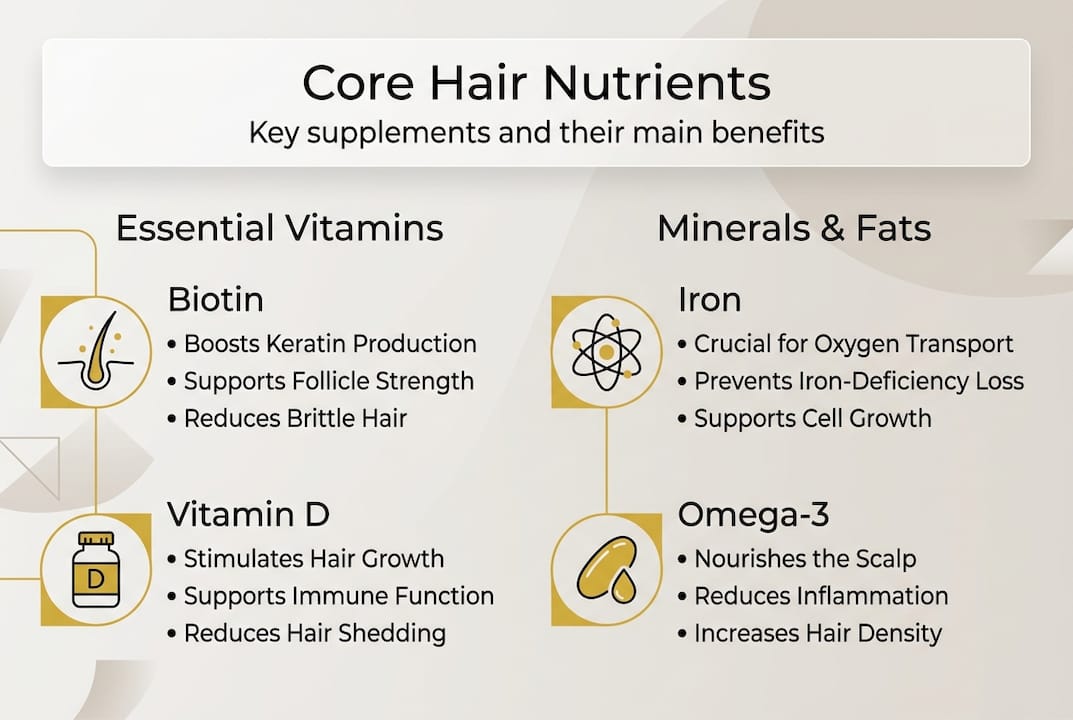
Here’s a quick breakdown of the core players:
| Nutrient | Primary role | Key sign of deficiency |
|---|---|---|
| Biotin | Keratin synthesis | Brittle nails, hair thinning |
| Iron (ferritin) | Oxygen delivery to follicles | Fatigue, diffuse shedding |
| Vitamin D | Follicle cycling regulation | Slow regrowth, seasonal loss |
| Zinc | Tissue repair, oil gland function | Flaky scalp, hair breakage |
| Omega-3s | Scalp hydration, inflammation control | Dry, dull strands |
| Botanical blends | Multi-pathway support | Stress-related or hormonal loss |
One of the biggest myths in the supplement space is that more biotin automatically means better hair. In reality, biotin is only effective if deficient, and true deficiency is rare in healthy adults. Worse, high doses can interfere with thyroid and cardiac lab tests, potentially masking serious health issues. The same caution applies to iron: supplementing without confirmed low ferritin can cause toxicity over time.
For a deeper look at how specific vitamins interact with your hair follicles, the connection between vitamins and hair growth is worth exploring. And if you want a broader overview of which nutrients matter most, this guide to top hair health vitamins lays it out clearly.
Pro Tip: Before spending money on biotin or iron supplements, get your blood levels tested. Supplementing nutrients you already have enough of rarely produces results and can sometimes do harm.
How to prepare: Assessing your needs and testing for deficiencies
With an understanding of what drives hair health, it’s crucial to start with a customized approach. Symptoms like unusual fatigue, brittle or dry hair, abnormal shedding (more than 100 strands per day), and slow regrowth can all point to underlying deficiencies. But symptoms alone aren’t enough to diagnose the problem.

Testing for deficiencies first is the most reliable way to know where you actually stand. Ask your doctor for a panel that includes ferritin, 25-OH vitamin D, serum zinc, and B12. Here are the ranges most practitioners consider optimal for hair health:
| Test | Optimal range for hair health |
|---|---|
| Ferritin | 70 to 100 ng/mL |
| Vitamin D (25-OH) | 40 to 60 ng/mL |
| Serum zinc | 70 to 120 mcg/dL |
| Vitamin B12 | 400 to 900 pg/mL |
Once you have your results, follow this step-by-step process:
- Identify your symptoms and note when they started, any life changes (stress, diet shifts, pregnancy), and family history of hair loss.
- Seek out testing through your primary care provider or a dermatologist who specializes in hair loss.
- Interpret results with professional guidance, not just internet searches, to understand whether a value is truly low or just borderline.
- Choose supplements based on confirmed gaps, not marketing claims or what worked for someone else.
Caution: Excess vitamin A or selenium can actually worsen hair loss rather than improve it. Over-supplementing is a real risk, and more is rarely better when it comes to micronutrients.
Supplements also work best when paired with a nutrient-rich diet. They’re designed to fill gaps, not replace whole foods. Understanding the role of micronutrients in your overall hair strategy gives you a more complete picture, and if you’re still unsure where to start, this resource on choosing hair vitamins can help you narrow down your options.
Step-by-step: Choosing the right supplement for your hair goals
Once you’ve confirmed your nutritional status, selecting the right supplement becomes a strategic decision. The supplement aisle (and the internet) is full of bold claims and flashy packaging. Knowing how to decode a label separates effective products from expensive placebos.
Start by checking these label essentials:
- Active ingredients and dosages: Are they listed clearly and at clinically studied amounts?
- Third-party testing: Look for NSF, USP, or Informed Sport certifications.
- Fillers and additives: Fewer is better, especially if you have sensitivities.
- Botanical ingredients: Pumpkin seed oil, tocotrienols, ashwagandha, and saw palmetto have growing evidence behind them.
Multi-botanical formulas outperform placebo in meta-analyses, making them a strong choice for women dealing with hair loss that has multiple contributing factors. Products like Nutrafol Women’s, which require 4 capsules per day and cost around $79 per month, have shown clinical improvements in hair density and reduced shedding after 3 to 6 months in studies on women aged 20 to 45.
Here’s a practical process for choosing your supplement:
- Set your goal: Are you targeting density, growth speed, reduced shedding, or overall scalp health?
- Compare formulas: Look for products that address your specific deficiency or hair concern.
- Check clinical evidence: Prioritize brands that publish or reference peer-reviewed studies.
- Consider your lifestyle: Do you prefer capsules, gummies, or a drinkable format? Is the formula vegan-friendly if that matters to you?
- Review price and subscription: Consistency matters, so choose something you can realistically afford and maintain for at least 6 months.
Pro Tip: If your hair loss seems linked to stress, hormonal shifts, or a combination of factors rather than a single nutrient gap, a multi-target formula is almost always the smarter starting point.
For more context on why supplementation can be a powerful strategy, read about supplement support for hair. You can also explore beauty-enhancing vitamins and how multivitamins for beauty can support your broader wellness goals.
How to use hair supplements for best results
After selecting your ideal product, maximizing its effectiveness depends on your routine and consistency. Taking a supplement sporadically or stopping after a few weeks is one of the most common reasons people feel let down by results. Hair growth is slow by nature, roughly half an inch per month, so patience is non-negotiable.
Supplements are most effective when taken consistently for 3 to 6 months alongside a balanced diet. Results vary by formula and individual biology, but this timeline is where most clinical studies begin to show measurable changes.
Here’s what to do and what to avoid:
Do:
- Take supplements with a meal to improve absorption and reduce any stomach discomfort.
- Stay hydrated throughout the day, since many nutrients require adequate water for proper uptake.
- Pair supplementation with a gentle scalp massage routine to boost circulation to the follicles.
- Track your progress with monthly photos taken in the same lighting and angle.
- Journal any changes in shedding, texture, or scalp condition to share with your doctor.
Don’t:
- Skip doses and try to double up the next day. Consistency beats intensity.
- Expect dramatic changes in the first 4 to 6 weeks. Early results are subtle.
- Combine multiple supplements without professional guidance, since overlapping ingredients can push you into excess territory.
- Ignore diet. Supplements fill gaps; they don’t replace the foundation.
The numbers back up the value of sticking with it. Drinkable nutraceuticals with 30+ natural ingredients have been shown to increase hair density by 12 to 27% within 6 months in premenopausal women with telogen effluvium (stress-related shedding). That’s a meaningful, measurable outcome, but only for women who stayed consistent.
If you’re looking for convenient daily formats, hair, skin and nails gummies are a popular option. For a broader overview of what works and why, this guide to beauty supplements for hair and nails is a solid resource.
Why the ‘magic pill’ mindset stalls progress and what works instead
Here’s something most supplement brands won’t tell you: a single ingredient almost never solves a hair problem on its own. Hair loss in women aged 20 to 45 is almost always multifactorial, meaning stress, hormones, nutrition, sleep, and genetics are all playing a role simultaneously. Reaching for a high-dose biotin supplement because it worked for a friend ignores all of that complexity.
Single nutrients like biotin are limited unless you’re genuinely deficient, and multi-botanical formulas are increasingly preferred for women seeking a natural, wellness-focused approach. The reason is simple: they address multiple pathways at once, including cortisol regulation, hormonal balance, and nutritional support.
The most effective mindset shift is treating supplements as one layer of a larger strategy, not the whole plan. True improvement requires months of consistent effort, a nutrient-dense diet, managed stress, and regular check-ins with your results. Patience isn’t passive; it’s an active choice to trust the process long enough to see it work. For a deeper look at what actually drives hair growth, unlocking hair growth secrets offers a grounded, evidence-based perspective.
Premium supplement solutions for radiant hair and beauty
If you’re ready to put expert recommendations into action, Lumieve Glow offers a curated range of premium options designed to fit your hair wellness journey.
Our wellness supplements are formulated with lab-tested, high-quality ingredients that align with the evidence-backed strategies covered in this guide. Whether you’re targeting shedding, density, or overall hair vitality, there’s a product built for your goal. For a next-level addition to your routine, our beauty collagen strips deliver targeted collagen support in a convenient, easy-to-use format. Explore the full range at Lumieve Glow and find the solution that fits your lifestyle and your goals.
Frequently asked questions
How long does it take to see results from hair supplements?
Most clinically studied hair supplements show visible improvements in hair density and reduced shedding within 3 to 6 months of consistent daily use.
Do I need biotin if my lab tests are normal?
Biotin only helps if deficient, which is rare, so taking extra biotin when your levels are normal is unlikely to improve hair growth and can interfere with important lab results.
Can vitamin supplements cause hair loss if taken incorrectly?
Yes. Excess vitamin A or selenium can actually worsen hair loss, which is why supplementing without confirmed deficiency is risky.
What is the best supplement type for multifactorial hair loss?
Multi-target botanical blends are more effective than single nutrients for hair loss tied to stress, hormones, and nutrition, since they address multiple contributing factors at once.
Are drinkable hair supplements effective for hair density?
Clinical studies show that drinkable nutraceuticals with 30 or more natural ingredients can increase hair density by 12 to 27% within 6 months for premenopausal women experiencing stress-related shedding.
