

TL;DR:
- Proper hair support begins with understanding individual health needs and patching deficiencies through testing.
- Effective hair vitamins focus on key ingredients like vitamin D, iron, zinc, and omega-3, with doses matching scientific recommendations.
- Quality and transparency matter; choose products with third-party verification and clinical backing for real results.
You’ve tried the gummies, the capsules, the fancy bottles with glowing reviews, and your hair still looks the same. It’s one of the most common frustrations in the beauty space, and it’s completely understandable. Most women spend months on supplements that were never right for their specific needs. The good news? Choosing the right hair vitamin isn’t guesswork. With a clear, evidence-based approach, you can stop wasting money on products that don’t deliver and finally give your hair the targeted support it actually needs.
Table of Contents
- Understand your hair and health needs
- Essential ingredients to look for in hair vitamins
- How to evaluate hair vitamin quality and effectiveness
- Making lasting results part of your wellness routine
- A realistic take: Why the ‘miracle pill’ for hair is a myth and what actually works
- Discover premium hair and wellness solutions from Lumieve
- Frequently asked questions
Key Takeaways
| Point | Details |
|---|---|
| Consult for Deficiencies | Check with a healthcare provider before choosing hair vitamins to ensure they address your unique needs. |
| Prioritize Key Ingredients | Look for vitamins D, biotin (if deficient), iron, zinc, vitamin A, and omega-3 for best hair health impact. |
| Verify Supplement Quality | Select third-party tested, clinically proven products for the safest and most effective results. |
| Consistency Is Key | Incorporate vitamins and nourishing foods into your daily routine for visible changes in 3 to 6 months. |
| Avoid Overuse Risks | Stick to recommended amounts and prioritize a balanced diet for overall well-being. |
Understand your hair and health needs
Before you add any supplement to your cart, it’s worth pausing to figure out what’s actually going on with your hair. Hair thinning and shedding in women aged 20 to 45 can stem from a surprisingly wide range of causes, and a vitamin won’t fix what a vitamin didn’t cause.
Common reasons your hair might need extra support include:
- Nutritional deficiencies (iron, vitamin D, zinc, or B vitamins)
- Hormonal shifts from pregnancy, postpartum recovery, or perimenopause
- Chronic stress, which can push hair follicles into a resting phase
- Restrictive diets that cut out key food groups
- Thyroid imbalances or other underlying health conditions
Hair is often one of the first places your body signals that something is off internally. Thinning hair isn’t just a cosmetic issue. It’s your body asking for attention. That’s why understanding supplement support for hair growth starts with understanding your body first.
“Consult a healthcare provider or dermatologist before starting hair vitamins to identify deficiencies and rule out underlying conditions, especially for women 20-45 experiencing hair thinning.” — Cleveland Clinic
This step matters more than most people realize. Women who are perimenopausal, postpartum, or following plant-based diets are among those most likely to have measurable deficiencies that respond well to supplementation. But even within those groups, the specific deficiency varies. A blood panel can reveal whether you’re actually low in iron or vitamin D, or whether something else entirely is driving the shedding.
Research into supplements for hair loss consistently shows that supplements work best when they’re correcting a real gap, not just adding more of something you already have enough of. Understanding the role of vitamins in follicle health gives you a much clearer picture of why targeted supplementation beats a generic approach every time.
Pro Tip: Ask your doctor for a full panel that includes ferritin (stored iron), vitamin D, and thyroid function before investing in any hair supplement. These three are the most commonly overlooked drivers of hair thinning in women.
Essential ingredients to look for in hair vitamins
Once you’ve considered your personal health profile, it’s time to focus on which ingredients truly matter in your hair vitamin search. Not every ingredient on a label is backed by solid science, and some can actually cause harm in excess.
Here’s a quick reference for the key nutrients your hair actually needs:
| Nutrient | Suggested daily amount | Key benefit | Caution |
|---|---|---|---|
| Vitamin D | At least 2,000 IU | Supports follicle cycling | Toxicity possible at very high doses |
| Biotin (B7) | 3 to 5 mg | Strengthens keratin structure | Only effective if you’re deficient |
| Iron | Varies by need | Carries oxygen to follicles | Avoid excess without testing |
| Zinc | 8 to 11 mg | Regulates oil glands, supports repair | Too much can cause hair loss |
| Vitamin A | 700 mcg (RDA for women) | Supports sebum production | Excess causes shedding |
| Omega-3 fatty acids | 1,000 to 2,000 mg | Reduces inflammation, adds shine | Generally well tolerated |
| Vitamin C | 75 mg | Aids iron absorption | Very safe at normal doses |
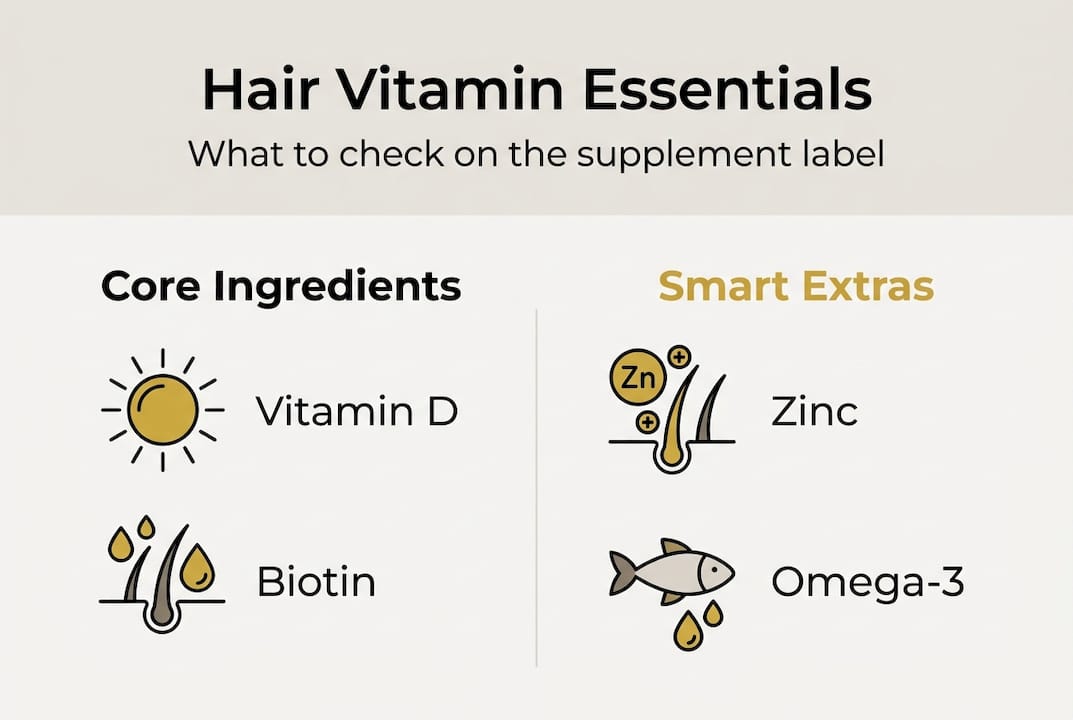
Prioritizing micronutrients for healthy hair means focusing on deficiencies common in women, including vitamin D at 2,000 IU, B vitamins, iron if intake is low, and omega-3 fatty acids.
Here’s how to approach your ingredient checklist when reading a label:
- Check the dose against the RDA. A product listing 10,000% of your daily biotin isn’t more effective. It’s just more.
- Look for synergistic combinations. Vitamin C paired with iron dramatically improves absorption. That’s a smart formula.
- Avoid mega-doses of vitamin A or selenium. Both can trigger hair loss when taken in excess, which is the opposite of what you want.
- Treat biotin skeptically unless you’re deficient. It’s one of the most marketed hair ingredients, but the evidence for it only holds up for women with a confirmed deficiency.
- Prioritize forms your body absorbs well. Ferrous bisglycinate absorbs better than ferrous sulfate. Methylcobalamin outperforms cyanocobalamin for B12.
A solid hair vitamin list doesn’t need to be long. It needs to be targeted.
Pro Tip: Flip the bottle over and read the “Other Ingredients” section. Fillers, artificial dyes, and allergens like gluten or soy can affect how well your body absorbs the active nutrients.
How to evaluate hair vitamin quality and effectiveness
Now you know the most important nutrients. Let’s examine how to pick a safe, credible, and effective hair vitamin.
The supplement industry isn’t regulated the same way pharmaceuticals are, which means quality varies enormously between brands. Third-party testing is your best filter. Look for seals from organizations like USP (United States Pharmacopeia), NSF International, or Informed Sport. These certifications confirm that what’s on the label is actually in the bottle, at the stated dose, without harmful contaminants.

Beyond the label, look for clinical backing. Brands like Nutrafol and Viviscal have published third-party tested formulas with measurable improvements in hair density and thickness in controlled studies. That’s a meaningful bar to clear, and most products don’t meet it.
Here’s a quick comparison to help you evaluate what you’re looking at:
| Feature | What to look for | Red flag |
|---|---|---|
| Third-party testing | USP, NSF, or Informed Sport seal | No certification listed |
| Clinical evidence | Published RCT or peer-reviewed study | Only “customer reviews” cited |
| Ingredient transparency | Full doses listed per ingredient | Proprietary blends with hidden amounts |
| Form factor | Matches your lifestyle (gummy, capsule, liquid) | Inconvenient form you won’t take daily |
| Price per serving | Reasonable for quality ingredients | Suspiciously cheap or inflated |
On the results timeline: supplements increase hair density and reduce shedding in women with telogen effluvium or androgenetic alopecia, with significant results appearing in 3 to 6 months. That’s not a fast fix. It’s a commitment.
For women looking at vitamins for radiant hair, convenience matters too. A gummy you’ll actually take every morning beats a capsule you forget in a drawer. The best supplement is the one that fits your real life.
Finally, keep perspective. Hair vitamins are adjunctive, meaning they support but don’t replace prescription treatments like minoxidil or finasteride when those are medically indicated. If your hair loss is significant, supplements are one piece of a larger plan.
Making lasting results part of your wellness routine
With your hair vitamin chosen, the final step is actually making it work in your real-world routine for healthy, beautiful hair.
The foundation is always food. Prioritizing food sources like fatty fish for omega-3, leafy greens for iron and zinc, and eggs for biotin gives your body nutrients in their most bioavailable forms. Supplements fill the gaps your diet leaves open. They don’t replace the diet itself.
Here’s a simple step-by-step for building a hair vitamin routine that actually sticks:
- Get your baseline. Blood work first, supplement second. Know what you’re correcting.
- Choose one targeted product. Avoid stacking multiple supplements without guidance. Overlap can push certain nutrients into excess.
- Pair it with a meal. Fat-soluble vitamins like D and A absorb better with food. Make it a non-negotiable part of breakfast.
- Set a 90-day minimum. Hair grows slowly. Commit to at least three months before evaluating results.
- Track your progress. Take a photo of your hairline and part width every four weeks. Changes are gradual and easy to miss without comparison.
- Revisit at six months. If you’ve seen no improvement, go back to your provider. The supplement may not be the right fit, or an underlying issue may still be unaddressed.
“Supplements are adjunctive, not a replacement for prescription treatments like finasteride or minoxidil when those are clinically indicated.” — Frontiers in Nutrition
For a broader look at how to support your whole beauty routine from the inside out, exploring supplements for hair and nails together can help you build a more complete and efficient daily regimen.
Pro Tip: If you’re taking biotin at higher doses, let your doctor know before any blood tests. Biotin can interfere with thyroid and cardiac lab results, leading to inaccurate readings.
A realistic take: Why the ‘miracle pill’ for hair is a myth and what actually works
Here’s something we feel strongly about at Lumieve Glow: the supplement industry has a habit of selling hope in a bottle, and hair vitamins are one of the biggest offenders. The marketing often implies that one capsule will reverse years of thinning in weeks. That’s not how hair biology works.
What actually works is less exciting but far more effective. You correct a real deficiency. You eat well. You manage stress. You stay consistent for months, not days. Supplements support that process. They don’t shortcut it.
The women who see the most meaningful results from hair vitamins are those who treat them as one tool in a broader strategy, not the whole strategy. Checking out multivitamin results for beauty can help you understand what realistic, sustained progress actually looks like over time. Consistency and a targeted approach will always outperform chasing the next trending ingredient.
Discover premium hair and wellness solutions from Lumieve
If you’ve made it this far, you’re ready to make a genuinely informed choice about your hair health. That’s exactly the kind of confident, intentional approach we built Lumieve Glow to support.
Our curated dietary supplements are formulated with quality-assured, lab-tested ingredients designed to address real beauty needs, not just fill a label with impressive-sounding names. Whether you’re looking for targeted hair support or a broader wellness supplements routine, you’ll find options that fit your lifestyle and your goals. Browse our featured collection to find the right starting point for your hair and glow journey.
Frequently asked questions
How long does it take to see results from hair vitamins?
Most women see noticeable improvement in hair density and reduced shedding within 3 to 6 months of consistent use, based on RCT evidence in women with telogen effluvium and androgenetic alopecia.
Which hair vitamins are most important for women 20-45?
Key nutrients include vitamin D, biotin if you’re deficient, iron, zinc, vitamin A, and omega-3 fatty acids, based on common deficiencies in women in this age group.
Are hair vitamins safe to take daily?
Yes for most women, but avoid exceeding recommended doses, particularly with vitamin A or selenium, and let your doctor know you’re taking biotin before any lab tests since it can skew results.
Should I use hair vitamins or focus on my diet?
Always prioritize food sources first since they offer better absorption, and use supplements only to fill specific gaps your healthcare provider identifies through testing.
Can biotin make my hair grow if I’m not deficient?
Evidence is inconsistent. Biotin benefits hair growth reliably only in women with a confirmed deficiency, so taking it without testing first may not make any difference.
