

TL;DR:
- Vitamin E is a potent fat-soluble antioxidant that protects skin from oxidative damage and supports the skin barrier.
- Topical vitamin E, especially when paired with vitamin C, enhances hydration, reduces inflammation, and improves skin texture.
- Eating foods rich in vitamin E, such as nuts and seeds, helps nourish the skin from within, complementing topical use.
Not every antioxidant ingredient deserves equal space in your skincare routine. Vitamin E sits in a unique category, one that’s often oversimplified into “good for skin” without any real explanation of why or how. The truth is more interesting and more nuanced than most beauty guides let on. As a fat-soluble nutrient with decades of research behind it, vitamin E influences your skin at both the cellular and surface level. This article cuts through the noise to give you a clear, science-backed picture of what vitamin E actually does, where it shines, where it falls short, and how to use it strategically for real, lasting radiance.
Table of Contents
- Understanding vitamin E: What it does for your skin
- Topical vitamin E: Benefits and best uses for radiance
- Vitamin E in your diet: Nourishing skin from within
- What science says: Limitations, risks and critical nuances
- What most skincare guides miss about vitamin E
- Explore science-backed beauty solutions with Lumieve
- Frequently asked questions
Key Takeaways
| Point | Details |
|---|---|
| Reliable antioxidant support | Vitamin E neutralizes free radicals and helps protect skin against environmental damage. |
| Topical benefits proven | Serums and moisturizers with vitamin E effectively hydrate, support skin barrier, and aid healing. |
| Diet first, supplements second | Dietary vitamin E from nuts, seeds, and greens is safer and preferred over high-dose oral supplements. |
| Synergize with vitamin C | Vitamin E works best alongside vitamin C for enhanced skin protection and radiance. |
| Know supplementation risks | High oral doses can pose health risks; evidence for anti-aging claims is mixed. |
Understanding vitamin E: What it does for your skin
Vitamin E is not a single compound. It’s actually a family of eight related molecules, but alpha-tocopherol is the form your skin uses most effectively and the one you’ll find in most skincare formulations. What makes it so valuable is its antioxidant function: it neutralizes free radicals before they can damage your skin cells.
Free radicals are unstable molecules generated by UV exposure, pollution, stress, and even normal metabolic processes. Left unchecked, they break down collagen, disrupt the skin barrier, and accelerate visible aging. Vitamin E acts as a fat-soluble antioxidant that intercepts these molecules, preventing oxidative stress and supporting a healthier, more resilient skin barrier.
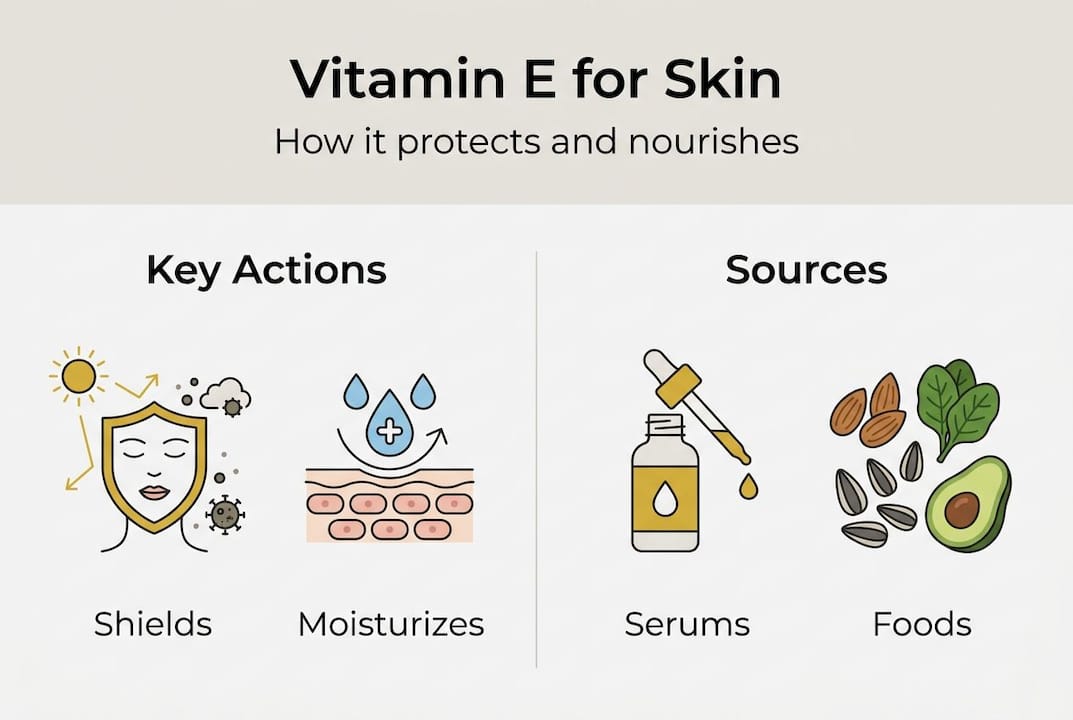
One of the most important things to understand about vitamin E is that it doesn’t work in isolation. When paired with vitamin C, the results are significantly stronger. Vitamin C enhances vitamin E’s protective action by regenerating it after it neutralizes a free radical, essentially giving vitamin E a second life. This synergy is one of the most well-documented partnerships in skincare science.
As part of your broader approach to beauty-enhancing vitamins, vitamin E offers a range of skin benefits that go beyond basic antioxidant protection:
- Reduces UV-induced oxidative damage by absorbing into the skin’s lipid layers
- Strengthens the skin barrier, helping to lock in moisture and keep irritants out
- Calms inflammation associated with sun exposure and environmental stress
- Supports collagen integrity by reducing free radical attacks on collagen fibers
- Enhances overall skin tone when used consistently as part of a targeted routine
For anyone serious about vitamins for glowing complexion, vitamin E is not optional. It’s foundational. The key is knowing how to use it correctly, which is exactly what the next sections cover.
“Vitamin E’s fat-soluble nature makes it uniquely suited to protecting the lipid-rich layers of your skin, where water-soluble antioxidants simply can’t reach.”
Topical vitamin E: Benefits and best uses for radiance
When you apply vitamin E directly to your skin, it gets to work quickly. Because it’s fat-soluble, it integrates into the lipid layers of your skin barrier rather than sitting on the surface. This is what makes it so effective at sealing in moisture and protecting against environmental damage.
Topical vitamin E promotes wound healing, reduces inflammation, enhances hydration, strengthens the skin barrier, and supports scar repair. For everyday use, this translates to softer, calmer, and more even-looking skin over time.
Here’s where topical vitamin E delivers the most noticeable results:
- Dry and dehydrated skin: Vitamin E helps reduce transepidermal water loss, meaning your skin holds onto moisture longer. Understanding the skin hydration science behind this process helps explain why vitamin E is a staple in moisturizers and overnight treatments.
- Post-sun skin: After UV exposure, vitamin E helps calm redness and reduce oxidative damage that’s already occurred.
- Uneven texture and scarring: Consistent topical use supports the skin’s natural repair process, gradually improving texture and the appearance of minor scars.
- Sensitive and compromised skin: Its anti-inflammatory properties make it a good option for skin that reacts easily to environmental triggers.
In terms of formulations, vitamin E appears in serums, moisturizers, facial oils, and eye creams. Serums tend to deliver higher concentrations and penetrate more effectively than heavier creams. For best results, look for products that list tocopherol or tocopheryl acetate in the first half of the ingredient list.
Pro Tip: Pair your vitamin E serum with a vitamin C serum in your morning routine. Apply vitamin C first, let it absorb for a minute, then follow with vitamin E. This layering method maximizes the antioxidant synergy and gives your skin stronger protection against daily environmental stress.
One thing worth noting: pure vitamin E oil can feel heavy and may clog pores for some skin types. A well-formulated serum that balances vitamin E with lightweight carriers is usually a smarter choice for daily use.
Vitamin E in your diet: Nourishing skin from within
Topical vitamin E does a lot, but what you eat matters just as much. Your skin actually receives vitamin E through sebaceous glands, the oil-producing glands in your skin. These glands secrete sebum, which carries vitamin E to the skin surface as a natural protective layer. This means your dietary intake directly influences how much vitamin E your skin has access to.

Oral vitamin E supports skin health through antioxidant protection, UV damage reduction, moisture retention, and wound healing. It’s a whole-body approach that complements topical use rather than replacing it.
The RDA is 15 mg per day for adults, and most people can meet this through food alone. Here are the top dietary sources:
| Food source | Vitamin E per serving | Notes |
|---|---|---|
| Sunflower seeds (1 oz) | 7.4 mg | Easy to add to salads or yogurt |
| Almonds (1 oz) | 6.8 mg | Great as a daily snack |
| Wheat germ oil (1 tbsp) | 20.3 mg | Concentrated source, use sparingly |
| Spinach (1 cup, cooked) | 3.7 mg | Pairs well with other skin nutrients |
| Avocado (half) | 2.1 mg | Also provides healthy fats for skin |
For beauty nutrition tips, here’s a practical approach to building vitamin E into your daily meals:
- Start your morning with a handful of almonds or sunflower seeds alongside breakfast.
- Add spinach or kale to at least one meal per day, whether in a smoothie, salad, or cooked side dish.
- Use avocado as a regular topping or base for sauces and dressings.
- Cook with sunflower or olive oil instead of butter to increase your vitamin E intake passively.
- Review your overall diet seasonally to ensure you’re consistently hitting the 15 mg daily target through varied whole foods.
Dietary vitamin E is absorbed more efficiently when consumed with healthy fats, which is one reason why pairing nuts with avocado or olive oil makes nutritional sense beyond just taste.
What science says: Limitations, risks and critical nuances
Vitamin E has real benefits, but the research also reveals some important limitations that most beauty content glosses over. Knowing these helps you make smarter decisions.
Systematic reviews show mixed results for oral vitamin E supplements in addressing photoaging. Most studies that show positive outcomes use vitamin E in combination with other antioxidants, not as a standalone ingredient. The evidence for oral vitamin E alone improving wrinkles or elasticity is not strong.
“Vitamin E is most effective as part of a broader antioxidant strategy, not a solo hero ingredient.”
Here’s a clear comparison to help you decide where to focus:
| Factor | Topical vitamin E | Oral supplements |
|---|---|---|
| Efficacy for hydration | Strong evidence | Moderate, indirect |
| Efficacy for photoaging | Moderate (best with vitamin C) | Weak standalone evidence |
| Safety profile | Generally safe; irritation possible | Risky at high doses |
| Best use case | Daily barrier support, scar care | Dietary gap filling only |
| Risk of overuse | Low | High above 400 IU/day |
On the risk side, high-dose oral vitamin E above 400 IU per day is associated with increased risks of bleeding, stroke, and in some studies, higher mortality. This is not a supplement to take casually or in large amounts.
For supplements for glowing skin, the smarter strategy is to use food as your primary source and reserve supplements for cases where dietary intake is genuinely insufficient. Understanding the types of beauty supplements available helps you prioritize what’s actually worth adding to your routine.
Pro Tip: If you’re considering a vitamin E supplement, choose a product that stays within the safe daily range and ideally combines it with vitamin C and other antioxidants for synergistic benefit rather than relying on a single high-dose pill.
What most skincare guides miss about vitamin E
Here’s the honest take: most guides either oversell vitamin E as a miracle ingredient or dismiss it as overhyped. Both miss the point entirely.
The real value of vitamin E lies in its role within a system. Topical vitamin E in a well-formulated serum, working alongside vitamin C and other antioxidants, consistently outperforms high-dose oral supplementation in real-world skin outcomes. Yet the supplement industry pushes megadose capsules while skincare brands underexplain the synergy that actually matters.
Dietary vitamin E should be your foundation. Food-sourced vitamin E comes packaged with other nutrients that support absorption and amplify its effects. No supplement perfectly replicates that. The evidence for multivitamins for beauty outcomes is similarly nuanced: combination approaches work better than isolated high doses.
If you want to get the most from vitamin E, think of it as one instrument in an orchestra. Enhancing your vitamin routine with smart pairings and consistent dietary habits will always outperform chasing a single ingredient at extreme doses. That’s the approach that holds up under scrutiny, and the one that actually shows in your skin.
Explore science-backed beauty solutions with Lumieve
Putting vitamin E science into practice starts with choosing products that are actually formulated to deliver results. At Lumieve Glow, every product is built around ingredient synergy and quality you can trust.
Our premium skincare serums are crafted to work with your skin’s biology, not against it. If you’re ready to experience the vitamin C and vitamin E pairing firsthand, our vitamin C serum is an excellent starting point. For internal support, explore our wellness supplements designed to complement your topical routine with clean, lab-tested nutrients. Science-driven beauty doesn’t have to be complicated.
Frequently asked questions
Does vitamin E actually prevent wrinkles and aging?
Vitamin E helps protect against environmental skin aging, but no strong evidence supports it reversing wrinkles or improving elasticity on its own. It works best as part of a multi-antioxidant approach.
Are there risks to taking vitamin E supplements for skin?
High-dose oral vitamin E above 400 IU per day is linked to increased bleeding risk and stroke. Topical use is generally safe, though sensitive skin types may experience mild irritation.
What foods are rich in vitamin E for healthier skin?
Nuts, seeds, and leafy greens are among the best sources, with almonds and sunflower seeds offering up to 7 mg per ounce. A varied whole-food diet can easily meet the 15 mg daily recommendation.
How do vitamin E and vitamin C work together for skin?
Vitamin C regenerates vitamin E after it neutralizes free radicals, making the antioxidant defense stronger than either ingredient alone. Together, they provide more resilient protection against UV and environmental damage.
