

TL;DR:
- Clinical trials confirm phytonutrient supplements can increase skin glow by 20% in 12 weeks.
- Phytonutrients defend against oxidative stress, boost collagen, and reduce pigmentation internally.
- Combining oral phytonutrient intake with topical skincare maximizes skin radiance and anti-aging benefits.
Clinical trials show that a botanical phytonutrient supplement blend can increase skin glow by 20% after just 12 weeks. That’s not a marketing claim. That’s measured, reproducible science. Yet most beauty routines still treat glowing skin as a topical-only goal, layering serum after serum while ignoring what’s happening beneath the surface. Phytonutrients, the bioactive compounds found in plants, work from the inside out to defend, repair, and illuminate your skin in ways that no cream alone can replicate. This guide breaks down exactly what phytonutrients are, how they work, which sources deliver real results, and how to build a strategy that actually sticks.
Table of Contents
- Phytonutrients: What they are and why they matter for skin glow
- How phytonutrients boost the skin’s glow: Mechanisms and clinical evidence
- Best phytonutrient sources: Supplements, foods, and topical combinations
- Nuances and limitations: Bioavailability, metabolism, and what to expect
- Our expert perspective: What most beauty guides miss about phytonutrients and glow
- Glow solutions: Find phytonutrient-rich supplements and skincare at Lumieve
- Frequently asked questions
Key Takeaways
| Point | Details |
|---|---|
| Phytonutrients drive real glow | Scientific evidence shows measurable improvements in skin radiance, hydration, and wrinkle reduction from phytonutrient-rich interventions. |
| Synergy matters most | Combining oral supplements with topical skincare enhances the effectiveness of phytonutrients for sustainable radiance. |
| Consistency is key | Visible results are achievable after 8-12 weeks of regular use of phytonutrient-rich products and routines. |
| Bioavailability affects outcomes | Results depend on how well your body absorbs and metabolizes phytonutrients, with nanoformulations and blends improving effectiveness. |
Phytonutrients: What they are and why they matter for skin glow
Phytonutrients are not vitamins or minerals. They’re a separate class of bioactive compounds that plants produce to protect themselves from UV radiation, insects, and environmental stress. When you consume them, your skin gets to borrow that same protective intelligence.
Vitamins like C and E are essential nutrients your body needs to function. Phytonutrients, by contrast, are not classified as essential, but the research on their skin benefits is hard to ignore. The main categories you’ll encounter are polyphenols (found in pomegranate and green tea), flavonoids (found in citrus and berries), and carotenoids (found in carrots, tomatoes, and leafy greens).
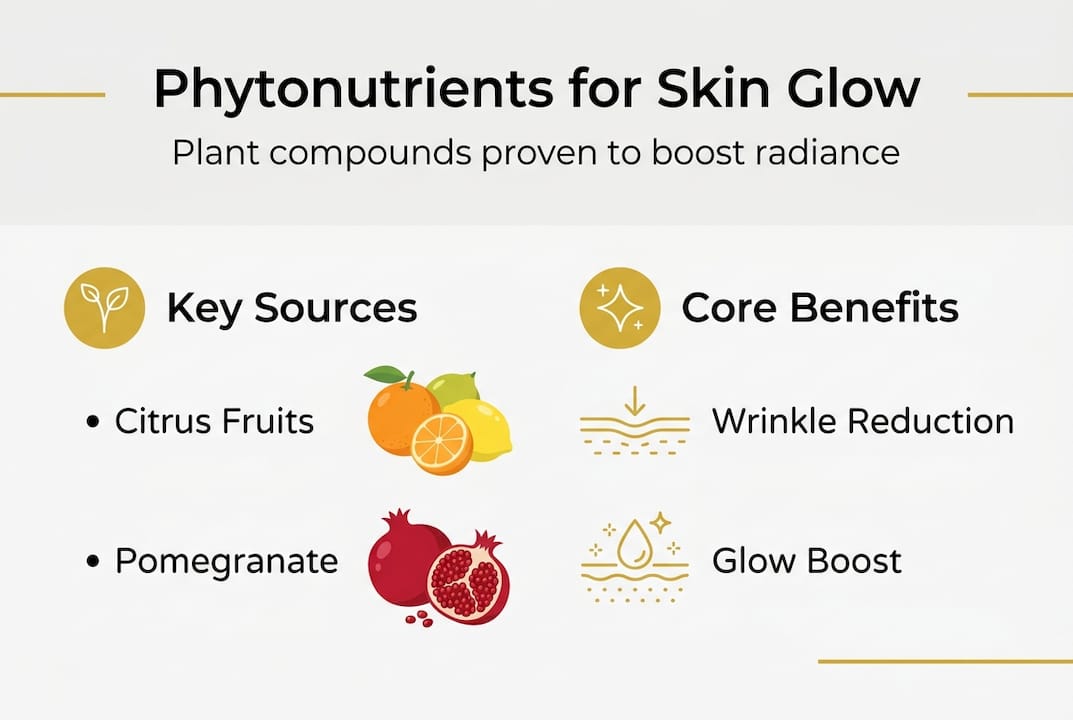
Each category works differently, but they share a common thread. According to a detailed review on Amla and pomegranate, phytonutrients scavenge free radicals, inhibit collagen-degrading enzymes like collagenase and elastase, promote collagen and elastin synthesis through TGF-β/Smad pathways, and suppress tyrosinase, the enzyme responsible for excess pigmentation. That’s a lot of skin-relevant activity from plant compounds.
Here’s what consistent phytonutrient intake can do for your skin:
- Firmer texture through collagen and elastin support
- Deeper hydration by reinforcing the skin’s moisture barrier
- Brighter, more even tone via tyrosinase inhibition and reduced oxidative stress
- Reduced hyperpigmentation from antioxidant and anti-inflammatory action
- Visible glow through improved microcirculation and cellular repair
Understanding the collagen benefits for skin helps clarify why phytonutrients matter so much. Collagen production naturally slows after your mid-20s, and phytonutrients are among the few compounds clinically shown to support its synthesis at a cellular level.
“Phytonutrients act on multiple pathways simultaneously, making them uniquely suited to address the complex, multi-factorial nature of skin aging and dullness.”
Pro Tip: Don’t treat phytonutrients as a replacement for your skincare routine. Think of them as the internal foundation that makes your topical products work harder and last longer.
How phytonutrients boost the skin’s glow: Mechanisms and clinical evidence
Knowing what phytonutrients are is one thing. Seeing how they actually change your skin is another. The science here is specific and measurable, which is exactly what you want when you’re investing in a beauty regimen.
The core mechanism is antioxidant defense. Free radicals, generated by UV exposure, pollution, and stress, break down collagen and dull your complexion. Polyphenols and flavonoids neutralize these free radicals before they can cause structural damage. This is not passive protection. It’s active cellular defense.
The second mechanism is collagen and elastin synthesis. Phytonutrients stimulate the TGF-β/Smad signaling pathway, which tells your skin cells to produce more collagen and elastin. More collagen means firmer, plumper skin with fewer fine lines.
The third mechanism is pigmentation control. Tyrosinase is the enzyme that triggers melanin production. Excess melanin creates dark spots and uneven tone. Phytonutrients, especially those from pomegranate and Amla, inhibit tyrosinase activity, helping your skin look more even and luminous.
Here’s what clinical trials actually found:
| Outcome measured | Result after 12 weeks |
|---|---|
| Forehead wrinkle reduction | 23% improvement |
| Skin gloss and glow increase | 20% improvement |
| Hyperpigmentation reduction | 24% improvement |
These numbers come from a clinical trial on women using a pomegranate, citrus, and gotu kola supplement blend. The improvements were measured objectively, not self-reported.
Beyond wrinkles and glow, a broader review confirms that phytonutrients enhance skin firmness, hydration, brightness, and even tone through systemic antioxidant defense, improved microcirculation, and cellular detoxification.
The top phytonutrient-driven skin improvements, ranked by clinical frequency:
- Increased skin radiance and glow
- Reduced fine lines and wrinkles
- Improved hydration and barrier function
- More even skin tone and reduced dark spots
- Enhanced firmness and elasticity
Exploring supplements for glowing skin and building a consistent supplement workflow for radiant skin can help you apply these findings practically.
Pro Tip: Consistency matters more than dosage. Clinical results appear at the 8-to-12-week mark, so commit to a full cycle before evaluating whether a supplement is working for you.
Best phytonutrient sources: Supplements, foods, and topical combinations
Now that the mechanisms are clear, the practical question is: where do you actually get phytonutrients, and which delivery method works best?
The honest answer is that all three routes, food, supplements, and topical skincare, have merit. But they’re not equal in potency or convenience.

| Source | Bioavailability | Convenience | Skin impact |
|---|---|---|---|
| Whole foods | Moderate | High | Gradual, systemic |
| Oral supplements | High (formulation-dependent) | High | Targeted, measurable |
| Topical skincare | Direct to skin | High | Localized, fast-acting |
| Oral + topical combined | Highest | Moderate | Synergistic, most effective |
A meta-analysis confirms that polyphenols reduce wrinkles (standardized mean difference of 0.48), improve hydration (SMD of 0.59), and support barrier function, with carotenoids specifically reducing redness from UV exposure. These are meaningful, measurable numbers.
Separately, hawthorn fruit supplementation was shown to improve skin hydration significantly in adults aged 25 to 75, with a mean change of +1.71 versus a decline of 3.00 in the placebo group.
The best phytonutrient ingredients to look for in supplements and topicals:
- Pomegranate extract (polyphenols, ellagic acid for pigmentation control)
- Amla (Indian gooseberry) (vitamin C, tannins for collagen support)
- Citrus flavanones (hesperidin, naringenin for antioxidant defense)
- Hawthorn fruit (oligomeric proanthocyanidins for hydration)
- Gotu kola (triterpenoids for collagen synthesis)
- Carotenoids (beta-carotene, lycopene for UV protection and tone)
For topicals, look for serums containing resveratrol, niacinamide paired with plant extracts, or vitamin C from botanical sources. Pairing these with oral supplements creates a two-pronged approach that addresses both internal oxidative stress and surface-level concerns.
Learning about beauty nutrition for radiant skin and exploring natural skin care routines can help you build a cohesive strategy around these ingredients.
Pro Tip: When choosing a phytonutrient supplement, look for blends that combine multiple plant sources rather than single-ingredient formulas. The synergy between polyphenols, carotenoids, and flavonoids amplifies results beyond what any one compound can do alone.
Nuances and limitations: Bioavailability, metabolism, and what to expect
Phytonutrients are genuinely powerful, but they’re not magic. Understanding the limitations helps you set realistic expectations and choose smarter products.
The biggest challenge is bioavailability, which refers to how much of a compound your body actually absorbs and uses after you consume it. Many polyphenols have naturally low bioavailability because they’re large molecules that break down quickly in the digestive tract. This is why two supplements with the same listed ingredient can produce very different results.
Some trials show only modest effects. For example, orange juice flavanones reduce wrinkles modestly but show no significant change in skin redness or inflammation. Individual metabolism plays a major role, particularly the gut microbiome’s ability to convert phytonutrients into active metabolites like S-equol, a compound that requires specific gut bacteria to produce.
Experts also note that benefits are strongest in photoaged skin, meaning women who have experienced UV-related skin changes tend to see the most dramatic improvements. Longer trials and higher bioavailability formulations consistently outperform short-term, low-dose approaches.
What you can realistically expect from a phytonutrient regimen:
- Weeks 1 to 4: Subtle improvements in hydration and skin texture
- Weeks 4 to 8: Noticeable reduction in dullness and early glow improvements
- Weeks 8 to 12: Measurable changes in wrinkle depth, pigmentation, and radiance
- Beyond 12 weeks: Continued improvement with sustained use
Exploring skin supplements that deliver radiance and understanding which vitamins for glowing complexion pair well with phytonutrients will help you build a more complete picture.
Pro Tip: Look for supplements that use nanoformulations or liposomal delivery. These technologies significantly improve bioavailability, meaning your body actually uses more of what you’re taking rather than eliminating it before it reaches your skin cells.
Our expert perspective: What most beauty guides miss about phytonutrients and glow
Most beauty guides fall into one of two camps. They either tell you to eat more berries and call it a day, or they recommend a 12-step topical routine with no mention of internal support. Both approaches leave results on the table.
The real insight from years of beauty research is that bioavailability trumps ingredient quantity. A supplement with a modest dose of highly bioavailable pomegranate polyphenols will outperform a high-dose product with poor absorption every single time. This is the variable most product labels and beauty articles completely ignore.
For women in their 25-to-40 range, oxidative stress and UV damage are already quietly eroding collagen and dulling skin tone, often before visible signs appear. Research confirms that phytonutrient-rich supplements and skincare directly target these early-stage mechanisms, making this the ideal window to start.
The most effective approach is not choosing between oral and topical. It’s using both strategically. Oral supplements address systemic oxidative stress, collagen synthesis, and pigmentation at the cellular level. Topical serums deliver direct, localized antioxidant protection and hydration. Together, they create a feedback loop where internal health amplifies topical results and vice versa.
Building skin care routines for glow that integrate both strategies is the approach we believe in, because the science supports it and the results speak for themselves.
Glow solutions: Find phytonutrient-rich supplements and skincare at Lumieve
You now have the science, the mechanisms, and the strategy. The next step is finding products that actually deliver on the clinical promise of phytonutrients.
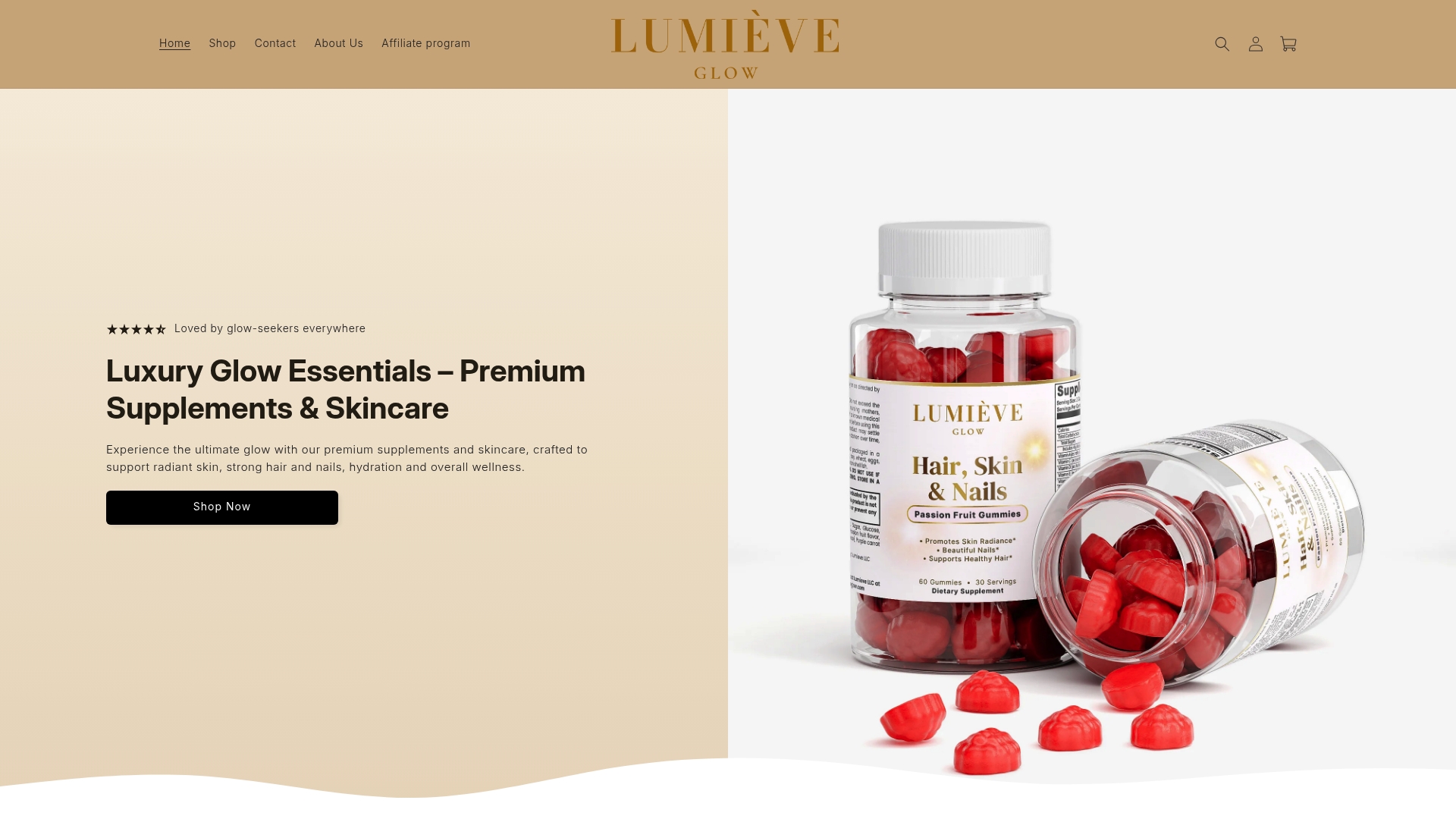
At Lumieve Glow, every product is formulated with quality-tested, bioavailable ingredients designed to support your skin from the inside out. Whether you’re starting with beauty collagen strips for targeted collagen support, exploring our premium skincare serums packed with botanical actives, or building a full routine with our wellness supplements, you’ll find solutions built around the same science covered in this guide. Real ingredients. Real results. Designed for women who take their glow seriously.
Frequently asked questions
What are phytonutrients, and how are they different from vitamins?
Phytonutrients are bioactive plant compounds that protect skin from oxidative stress and support collagen production, while vitamins are essential nutrients required for basic bodily functions. Both matter for skin health, but they work through different pathways.
How fast will I see results from phytonutrient supplements for skin glow?
Clinical studies show that glow and wrinkle improvements become measurable after 8 to 12 weeks of consistent use. Hydration improvements can appear earlier, often within the first four weeks.
Do phytonutrients work better as supplements, foods, or topical skincare?
Combining oral supplements with topical skincare delivers the strongest results. Polyphenols reduce wrinkles and improve hydration when taken orally, while topical application provides direct, localized benefits that oral intake alone cannot replicate.
Are there any side effects to phytonutrient-rich beauty supplements?
Clinical trials report no major side effects from phytonutrient supplements, though individual tolerances vary. Starting with a lower dose and gradually increasing is always a sensible approach.
