

TL;DR:
- Internal nourishment through targeted nutrients enhances skin structure, beyond topical products.
- Core nutrients like vitamins A, C, E, omega-3s, zinc, biotin, and collagen support skin, hair, and nails.
- Consistent, balanced intake over months, combined with a nutrient-rich diet, yields visible skin improvements.
Your skincare shelf might be packed with serums and creams, but if your body isn’t getting the right nutrients, your skin will always hit a ceiling. Topical products only address the surface, while internal nourishment is essential for truly radiant skin. Beauty nutrition is the practice of feeding your skin, hair, and nails from within, using specific nutrients that support the biological processes behind a healthy glow. This guide breaks down what beauty nutrition actually is, which nutrients drive real results, what the science says, and how you can build it into your daily routine starting today.
Table of Contents
- What is beauty nutrition?
- Core nutrients for radiant skin, hair, and nails
- How beauty nutrition works: What science really shows
- How to apply beauty nutrition: Daily strategies
- A fresh perspective: What most beauty nutrition guides miss
- Take the next step with premium beauty nutrition
- Frequently asked questions
Key Takeaways
| Point | Details |
|---|---|
| Beauty is nourished from within | Internal nutrition supports radiant skin, healthy hair, and strong nails more effectively than topical products alone. |
| Focus on proven nutrients | Vitamins, collagen peptides, omega-3s, and antioxidants form the science-backed foundation of beauty nutrition. |
| Consistency drives results | Lasting improvements require daily commitment to nutrition, with most changes visible in 3-6 months. |
| Personalize your plan | Your diet, genetics, and lifestyle all influence which beauty nutrition strategies will work best for you. |
What is beauty nutrition?
Beauty nutrition is the intentional use of food and targeted supplements to support the internal pathways that determine how your skin looks and feels. It’s not a trend. It’s rooted in how the body actually builds and maintains skin tissue, hair follicles, and nails at the cellular level.
Think of your skin as a living structure. Collagen fibers give it firmness. Lipids in the skin barrier lock in moisture. Antioxidants neutralize the free radicals that cause premature aging. All of these depend on a steady supply of specific nutrients. When those nutrients are missing or insufficient, the structure weakens, and no topical product can fully compensate.
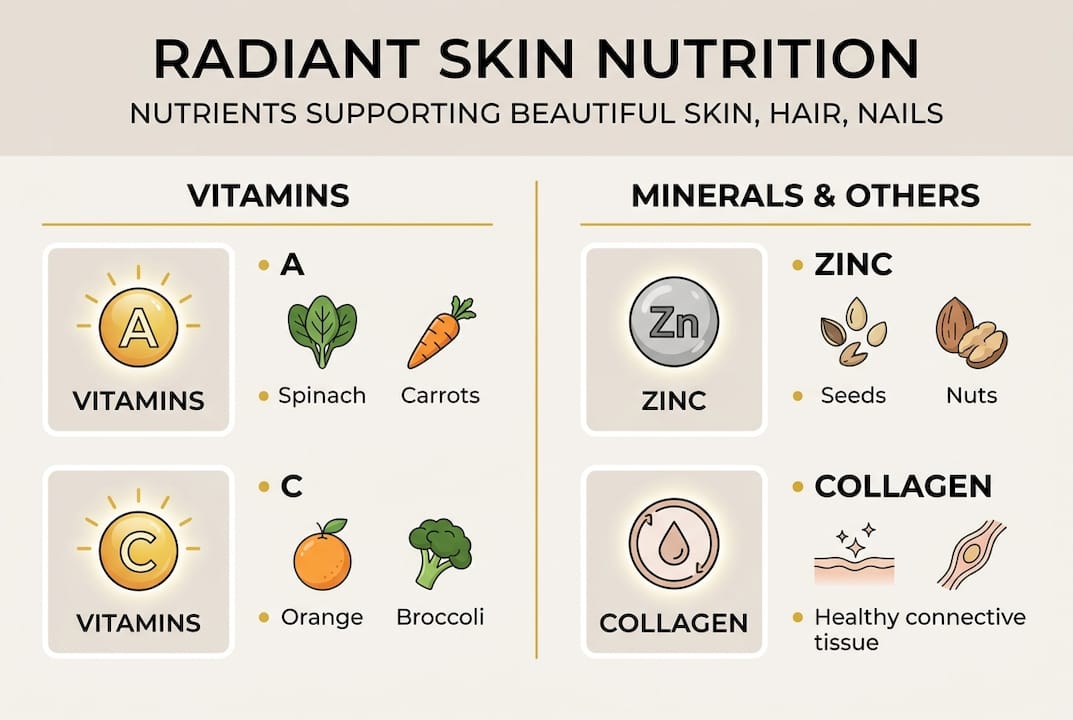
This is the key difference between beauty nutrition and a standard skincare routine. Topicals work on the outermost layer of skin. Nutrition works on the layers beneath, influencing how cells are made, how fast they turn over, and how well they defend against damage.
The science points to four main mechanisms:
- Collagen synthesis: Vitamin C and certain amino acids are required to build collagen, the protein that keeps skin plump and firm.
- Oxidative stress reduction: Vitamins A, C, and E, along with polyphenols, neutralize free radicals that break down skin cells.
- Anti-inflammatory effects: Omega-3 fatty acids and zinc help calm chronic low-grade inflammation that accelerates skin aging.
- Skin barrier support: Essential fatty acids and ceramide precursors reinforce the lipid barrier that keeps skin hydrated.
“Beauty nutrition targets internal pathways for collagen synthesis, oxidative stress, inflammation, and barrier lipids, complementing topicals rather than replacing them.”
This is also why the quality of your supplements matters. Bioavailable forms of nutrients, like hydrolyzed collagen peptides or high-molecular-weight hyaluronic acid, are absorbed and used more efficiently than lower-quality alternatives. Understanding collagen benefits for skin helps you see why premium formulations consistently outperform generic ones. You can also explore nutrients for healthy skin for a broader overview of how dietary choices shape your complexion over time.
Core nutrients for radiant skin, hair, and nails
Knowing the concept is just the beginning. What really matters is which specific nutrients move the needle. Research consistently points to a core group that supports beauty from the inside out.
Key nutrients include vitamins A, C, E, omega-3 fatty acids, zinc, biotin, and collagen peptides. Each plays a distinct role, and together they create a synergistic effect that no single ingredient can replicate alone.

| Nutrient | Function | Studied benefit |
|---|---|---|
| Vitamin A | Cell turnover, sebum regulation | Smoother texture, reduced breakouts |
| Vitamin C | Collagen synthesis, antioxidant | Brighter tone, firmer skin |
| Vitamin E | Membrane protection, antioxidant | Reduced UV damage |
| Omega-3s | Anti-inflammatory, barrier support | Improved hydration, calmer skin |
| Zinc | Wound healing, enzyme function | Reduced acne, faster repair |
| Biotin | Keratin production | Stronger hair and nails |
| Collagen peptides | Structural protein replenishment | Improved elasticity and firmness |
Biotin and zinc are especially important for hair and nail strength, two areas where deficiencies show up fast and visibly. Many women don’t realize their brittle nails or shedding hair are nutritional signals, not just cosmetic problems.
Beyond the core six, trending ingredients are earning their place in the evidence base:
- Polyphenols (from berries, green tea, and olive oil) protect against UV-induced damage and reduce inflammation.
- Carotenoids (from carrots, tomatoes, and leafy greens) improve skin tone and reduce redness.
- Probiotics support the gut-skin axis, helping to regulate inflammation and improve barrier function.
The synergy between antioxidants and collagen peptides is particularly powerful. Vitamin C, for example, is required for collagen to actually form in the body, so taking collagen without adequate vitamin C is like building a house without mortar. For a deeper look at how these nutrients work together, supplements for glowing skin and multivitamins for beauty are worth exploring.
How beauty nutrition works: What science really shows
Once you know which nutrients to focus on, it’s important to separate clinical results from marketing myths. The research is promising, but it comes with nuance.
A meta-analysis confirms that collagen reduces wrinkles, probiotics improve hydration, and carotenoids reduce redness. These are not minor effects. They represent measurable, consistent improvements across multiple trials. But the improvements are most reliable for hydration, elasticity, and overall glow rather than deep structural wrinkles.
Oral hyaluronic acid improves skin hydration and elasticity within 12 weeks in clinical trials. Collagen peptides typically require at least 90 days of consistent use before visible changes appear. This timeline matters because most people quit too early and conclude that supplements don’t work.
| Ingredient | Evidence strength | Timeline for results |
|---|---|---|
| Collagen peptides | Strong for elasticity | 3+ months |
| Hyaluronic acid (oral) | Strong for hydration | 12 weeks |
| Probiotics | Moderate for barrier/hydration | 8-12 weeks |
| Carotenoids | Moderate for tone/redness | 10-12 weeks |
| Polyphenols | Emerging, promising | 8+ weeks |
Who benefits most? Women with nutrient gaps, postmenopausal women experiencing collagen decline, and those with compromised gut health tend to see the most significant improvements. High-quality trials show that collagen’s effects on surface wrinkles are real but modest, and the strongest benefits are in hydration and skin texture rather than dramatic wrinkle reversal.
For practical application, hyaluronic acid benefits and collagen results for skin provide solid context on what to realistically expect. You can also explore hydration and elasticity for guidance on combining oral and topical approaches.
Pro Tip: Consistency and synergistic nutrition matter far more than taking a high dose of any single ingredient. A moderate daily intake across multiple nutrients, sustained over months, outperforms megadosing one supplement for a few weeks.
How to apply beauty nutrition: Daily strategies
With a clear picture of what works, let’s turn to how you can actually put beauty nutrition into practice without overhauling your entire life.
The foundation is food. A Mediterranean-style diet rich in antioxidants and polyphenols delivers broad beauty benefits and outperforms isolated supplementation on its own. Reducing ultra-processed foods matters just as much as adding good ones. Processed foods can reverse progress by promoting inflammation and disrupting the gut-skin axis.
Supplements are an adjunct, not a replacement. They fill gaps that diet alone can’t always cover, especially for nutrients like collagen peptides and hyaluronic acid that aren’t easily obtained in meaningful amounts from food. Genetic and metabolic differences also affect how well you respond to specific nutrients. For example, S-equol producers (women who can convert soy isoflavones into a more active form) see better skin benefits from soy-based supplements than non-producers.
Here’s a practical five-step framework to get started:
- Audit your diet. Identify gaps in vitamins A, C, E, omega-3s, and zinc before adding supplements.
- Prioritize whole foods first. Build meals around colorful vegetables, fatty fish, nuts, seeds, and legumes.
- Add targeted supplements. Choose bioavailable forms like hydrolyzed collagen, liposomal vitamin C, and high-quality omega-3s.
- Reduce inflammatory inputs. Cut back on sugar, refined carbs, and alcohol, which accelerate oxidative stress.
- Monitor and adjust. Take photos and note skin texture changes every four weeks.
For a structured approach, a beauty supplement plan can help you map out a personalized routine with clear goals and timelines.
Pro Tip: Track your changes for three to six months before drawing conclusions. Skin cell turnover takes about 28 days, and deeper tissue changes take longer. Patience is the most underrated beauty strategy.
A fresh perspective: What most beauty nutrition guides miss
Most articles on beauty nutrition hand you a list of nutrients and send you on your way. What they rarely address is the messier, more important truth underneath.
First, a significant portion of the research on collagen and beauty supplements is industry-funded, which doesn’t invalidate the findings, but it does mean you should look for independent replication before trusting dramatic claims. The honest picture is that beauty nutrition works best for hydration, elasticity, and glow. It is not a wrinkle eraser.
Second, gut health is arguably the most important and least discussed variable. The gut-skin axis is real. Chronic gut inflammation, poor microbiome diversity, and impaired nutrient absorption can undercut even the best supplement routine. Probiotics help, but they’re a piece of a larger puzzle.
Third, your genetics determine your response more than any marketing copy will admit. Personalization isn’t a luxury. It’s the difference between results and frustration. A personalized beauty supplement plan that accounts for your diet, life stage, and health history will always outperform a generic stack.
The brands and guides that skip these details are selling simplicity. Real beauty nutrition is worth doing right.
Take the next step with premium beauty nutrition
You now have the science, the strategy, and the framework. The next step is putting it into action with products that actually match the evidence.
At Lumieve Glow, our formulations are built around bioavailability and synergy, the same principles the research supports. Our Beauty + Collagen Strips deliver hydrolyzed collagen in a fast-absorbing format designed for daily consistency. For broader support, explore our full range of wellness supplements formulated to complement a nutrient-rich diet. And for topical reinforcement, our hyaluronic acid serum pairs beautifully with an oral hydration routine. Inside and outside, working together, the way the science intended.
Frequently asked questions
How long does it take to see results from beauty nutrition?
Oral hyaluronic acid improves hydration and elasticity within 12 weeks, while collagen peptides require at least 90 days of consistent use. Most women notice the biggest changes between the three and six month mark.
Is a supplement enough for radiant skin, or do I need to change my diet too?
Supplements work best alongside a nutrient-rich diet. A Mediterranean-style diet with antioxidants and polyphenols consistently outperforms isolated supplementation when studied head to head.
Can beauty nutrition help with skin issues like wrinkles or acne?
Collagen reduces wrinkles, probiotics improve hydration, and polyphenols reduce inflammation, but meaningful changes require months of consistent effort combined with a holistic routine.
Are there risks or side effects to beauty nutrition supplements?
Most are safe at recommended doses, but excess intake of single nutrients can be harmful or interact with medications. Balance and synergy across nutrients matter more than high doses of any one ingredient.
