

TL;DR:
- True skin radiance reflects healthy, even, and smooth skin, not just surface glow or shimmer.
- Hydration and barrier repair are essential for achieving lasting radiance by supporting light reflection.
- Consistent protection from UV damage and internal support through ingredients and supplements are key to maintaining luminous skin.
Most of us have scrolled past a product promising “lit-from-within glow” and assumed that was the same as radiant skin. It is not, and the difference is not just semantic. Radiance is a clinical concept rooted in how evenly your skin reflects light, how smooth and uniform its surface is, and how balanced your skin tone appears. Glow can come from a dab of facial oil or a highlighter. True radiance signals that your skin is actually healthy at a structural level. This guide breaks down the real science of skin radiance, exposes the myths that keep most routines stuck, and gives you a practical path to the kind of luminous skin that does not wash off at night.
Table of Contents
- Understanding skin radiance: More than just glow
- The science behind skin radiance: Barriers, hydration, and light reflection
- Factors that dull radiance: Photoaging, pigmentation, and real-world obstacles
- From science to routine: How to enhance your skin’s radiance every day
- Measuring and tracking skin radiance: What really matters
- Why most beauty advice on radiance misses the mark
- Discover advanced solutions for radiant skin
- Frequently asked questions
Key Takeaways
| Point | Details |
|---|---|
| Radiance vs. glow | True radiance means even tone and smoothness, not just shine or oiliness. |
| Hydration is crucial | Well-hydrated, healthy skin reflects light uniformly for a more radiant look. |
| Protect daily | Consistent sun and pigment protection is vital for lasting radiance, especially in diverse skin types. |
| Track real results | Use standardized lighting and routines to notice genuine radiance, not just temporary shine. |
Understanding skin radiance: More than just glow
When dermatologists and clinicians talk about radiant skin, they are not describing a dewy finish or a reflective sheen. They are describing a specific visual quality: a surface that reflects light uniformly because it is smooth, even-toned, and structurally intact. According to clinical definitions, skin radiance means a healthy, even surface and tone that reflects light more uniformly, a key visible characteristic described by both patients and clinicians.
Glow, by contrast, is largely about hydration, dewiness, or the presence of natural oils. You can manufacture glow with a product. You cannot manufacture radiance without actually improving your skin’s health.
Here is why this distinction matters so much for your routine:
- Shimmer and gloss create the optical illusion of brightness but do nothing for uneven tone or rough texture.
- Facial oils can temporarily smooth the surface and catch light, but they do not address pigmentation or barrier damage.
- Highlighters are purely cosmetic and vanish with your makeup.
- True radiance persists because it is built into the skin’s structure, not layered on top of it.
A common misconception is that oily or shiny skin is inherently more radiant. In reality, excess sebum can scatter light unevenly, making skin look greasy rather than luminous. Radiance requires evenness, not just shine.
“Radiance is not a single product outcome. It is a visible signal of underlying skin quality, including tone consistency, surface smoothness, and structural health.”
Understanding this reframes your entire approach to skincare. Instead of chasing products that add shine, you start looking for key ingredients for radiance that actually repair and refine your skin from the inside out. That shift in thinking is where real results begin.
The science behind skin radiance: Barriers, hydration, and light reflection
To truly enhance radiance, it is vital to understand what shapes how your skin actually looks. The outermost layer of your skin, the stratum corneum, functions like a biological lens. When it is intact and well-hydrated, it creates a smooth optical surface that reflects light evenly. When it is damaged or dehydrated, it becomes rough and irregular, scattering light in all directions and making your skin look dull.
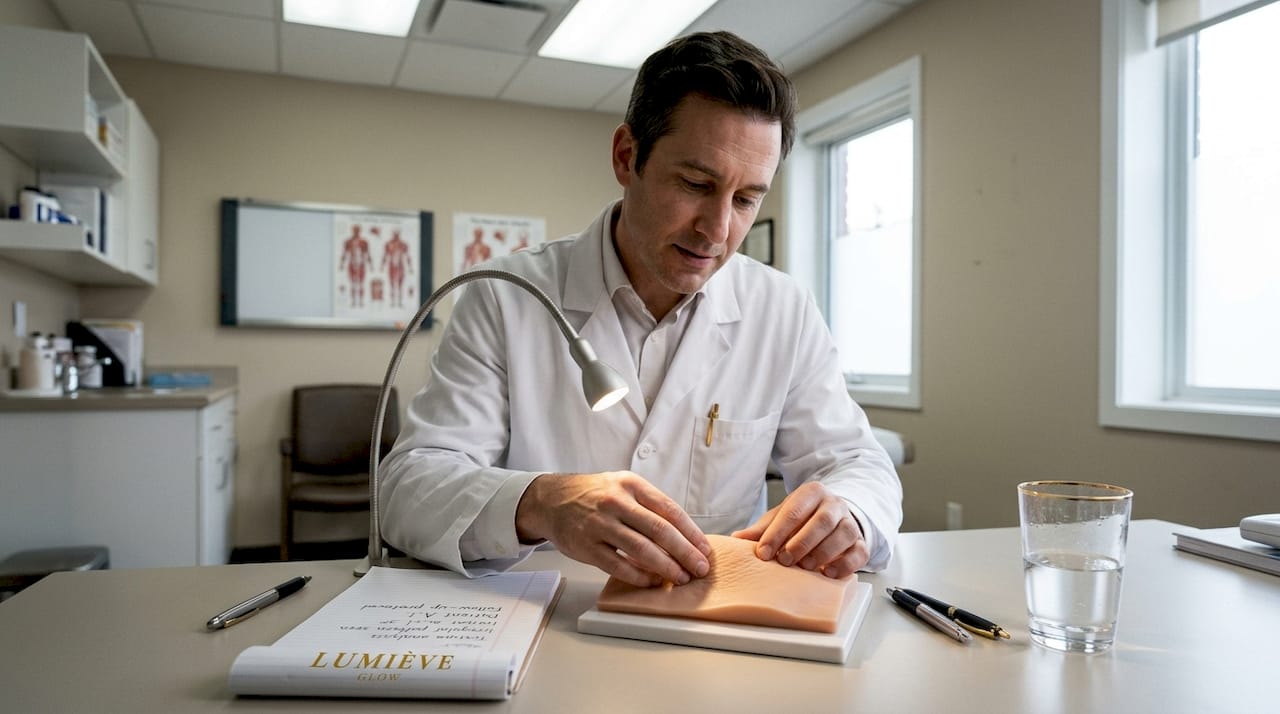
Skin lipids, the natural fats that hold your barrier together, play a huge role here. They fill the microscopic gaps between skin cells and keep water locked in. When lipid levels drop, the surface becomes uneven at a microscopic level, and that unevenness is visible to the naked eye as dullness.
Hydration is foundational. The science of hydration shows that water content in the stratum corneum directly affects how plump, smooth, and light-reflective your skin appears. A well-hydrated surface is literally more optically uniform.
| Feature | Hydrated skin | Dehydrated skin |
|---|---|---|
| Light reflection | Even, soft luminosity | Scattered, dull |
| Surface feel | Smooth, supple | Tight, flaky |
| Visual appearance | Plump, even-toned | Rough, sallow |
| Barrier function | Intact | Compromised |
According to current research, barrier and hydration are directly tied to radiance; when the barrier is intact, skin reflects light more evenly, and when impaired, it appears dull or rough.
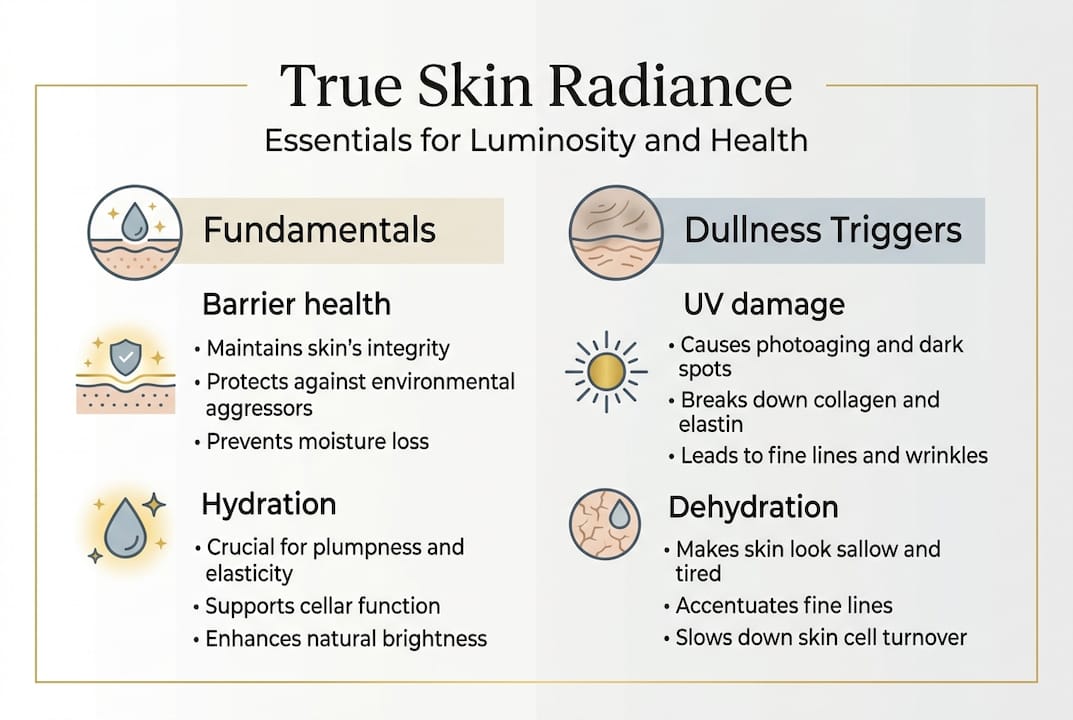
One important edge case: some people increase surface gloss with heavy occlusives or oils without actually repairing the barrier. The skin looks shiny in good lighting but still feels rough and uneven. That is gloss, not radiance.
Pro Tip: Before adding any brightening serum or glow product, focus on barrier repair first. A repaired barrier amplifies the effect of every other product you use. Look into hyaluronic acid for radiance as a foundational hydration ingredient that supports barrier function without adding greasiness.
- Ceramides restore lipid gaps in the barrier
- Niacinamide calms inflammation and evens tone
- Hyaluronic acid draws water into the skin’s surface layers
- Peptides support structural skin proteins over time
Factors that dull radiance: Photoaging, pigmentation, and real-world obstacles
While biology sets the stage for radiant skin, daily challenges and environment can work against you. The two biggest culprits are UV exposure and uneven pigmentation. Both directly interfere with the even light reflection that defines true radiance.
UV radiation triggers melanin overproduction, leading to dark spots, uneven tone, and a patchy surface that scatters light inconsistently. Over time, photoaging also breaks down collagen and elastin, making skin thicker and less optically smooth. Inflammation, whether from sun exposure, harsh products, or diet, compounds the problem by disrupting barrier function and accelerating pigment changes.
Clinical research confirms that photoaging and pigment problems can reduce radiance, and that sun protection combined with pigment management is key for maintaining a luminous look, especially for women with deeper skin tones.
| Factor | Without sun protection | With daily SPF 30+ |
|---|---|---|
| Pigmentation | Increases over time | Significantly reduced |
| Skin tone evenness | Patchy, uneven | More consistent |
| Long-term radiance | Declines with age | Better preserved |
| Inflammation risk | Higher | Lower |
Here is a practical daily strategy to protect your radiance:
- Apply broad-spectrum SPF 30 or higher every morning, even on cloudy days.
- Reapply sunscreen every two hours if you are outdoors.
- Use a vitamin C serum in the morning to neutralize free radicals from UV exposure.
- Include a pigment-targeting ingredient like niacinamide or alpha arbutin in your evening routine.
- Avoid picking at skin, which triggers post-inflammatory hyperpigmentation.
Supporting your skin from the inside also matters. Phytonutrients for skin such as antioxidants from plant sources help neutralize oxidative stress that accelerates dullness and uneven tone.
From science to routine: How to enhance your skin’s radiance every day
Knowing what can undermine radiance sets the stage for practical, science-backed action. The good news is that a sustainable radiance routine does not require a dozen products. It requires the right steps, done consistently.
Morning routine:
- Gentle cleanser (removes overnight buildup without stripping barrier)
- Vitamin C serum (antioxidant protection and tone evening)
- Moisturizer with ceramides or hyaluronic acid (barrier support and hydration)
- SPF 30 or higher (non-negotiable protection)
Evening routine:
- Double cleanse if you wear sunscreen or makeup
- Treatment serum (niacinamide, retinol, or peptides depending on your concern)
- Rich moisturizer or barrier repair cream
This natural skincare routine approach works because it addresses the root causes of dullness rather than masking them.
Quick fixes can backfire. Heavy facial oils applied over an impaired barrier can clog pores and worsen uneven texture. Shimmer-heavy products can emphasize dry patches rather than hide them. The ultimate hydration guide explains why layering hydration correctly is more effective than using a single heavy product.
Supplements also play a role. Research shows that oral hyaluronate can improve facial hydration and reduce water loss, though radiance is not always tied to increased gloss metrics in clinical trials. That means internal hydration support can improve skin quality in ways that do not always show up as shine, but do show up as healthier, more even skin.
Other radiance-boosting supplements worth considering:
- Collagen peptides for structural support
- Vitamin C for antioxidant defense and collagen synthesis
- Zinc for barrier integrity and inflammation control
- Omega-3 fatty acids for lipid barrier maintenance
Pro Tip: Take a photo of your skin in natural light every two weeks, same time of day, same angle. Radiance improvements are gradual and easy to miss day-to-day. Photos give you an honest, motivating record of real progress.
Measuring and tracking skin radiance: What really matters
As you implement these changes, tracking results helps you stay motivated and keeps your routine grounded in reality. But measuring radiance is trickier than it sounds.
Lighting is everything. Skin that looks luminous in warm, diffused light can look flat under harsh overhead fluorescents. Your phone camera also processes color and brightness differently depending on settings, time of day, and background. These variables mean that informal comparisons can mislead you about whether your routine is actually working.
Clinical researchers use calibrated imaging devices and controlled lighting to measure radiance accurately. Research confirms that proper lighting and calibrated devices are essential for tracking results because radiance is not a single metric and conditions matter deeply.
For at-home tracking, here is what actually signals progress:
- Surface evenness: Does your skin feel smoother to the touch?
- Tone consistency: Are dark spots or redness fading?
- Hydration level: Does skin feel plump rather than tight after cleansing?
- Dullness reduction: Is your skin less flat-looking in natural light?
Gloss and shine are not reliable indicators. A skin barrier that is healing will show progress in texture and tone long before it shows up as visible luminosity.
Following simple steps for radiant skin consistently for 8 to 12 weeks gives you enough data to evaluate what is working. Shorter timeframes are rarely enough to see meaningful changes in tone or barrier health.
Pro Tip: Use the same natural light source, same distance, and no filters for your tracking photos. Consistency in your photos matters as much as consistency in your routine.
Why most beauty advice on radiance misses the mark
Here is what we rarely see discussed honestly in mainstream beauty content: most “glow” advice is built around selling you a feeling, not improving your skin. The industry profits more from quick-fix shimmer drops and overnight glow masks than from the boring, effective truth that barrier repair and pigment balance are the actual foundations of radiant skin.
We have seen this pattern repeatedly. Someone spends months layering oils and glow serums, sees temporary results, and then wonders why their skin still looks dull in unfiltered photos. The answer is almost always that the barrier was never addressed. The science and secrets of hydration point clearly to barrier integrity as the starting point, not an afterthought.
Gloss and shimmer can cover dullness for a few hours. They cannot fix uneven tone, repair a compromised barrier, or reduce chronic inflammation. Those outcomes require consistent, disciplined habits over weeks and months. The brands that tell you otherwise are selling you a shortcut that does not exist.
True radiance is not a product. It is a condition your skin reaches when it is consistently cared for, protected from UV damage, and supported from within. That is a longer road, but it is the only one that leads somewhere real.
Discover advanced solutions for radiant skin
If the science in this article has you rethinking your routine, you are in the right place. At Lumieve Glow, we have built our product line around exactly the principles covered here: barrier support, hydration, and tone-evening ingredients that work at a structural level.
Our premium skincare serums are formulated with clinically recognized ingredients, including our vitamin C serum designed to protect against photoaging while evening skin tone. Pair topical care with our wellness supplements to support radiance from the inside out. Real radiance is built on consistency and the right ingredients. We make it easier to get both.
Frequently asked questions
What exactly is skin radiance?
Skin radiance is the visual impression of healthy, smooth, and even-toned skin that reflects light uniformly, signaling optimal skin quality rather than just surface shine.
Can hydration alone make my skin look more radiant?
Hydration improves radiance by smoothing the surface and supporting barrier health, but barrier and hydration work together, and factors like pigmentation and inflammation also shape how luminous your skin appears.
How does sun protection affect skin radiance?
Sun protection preserves radiance by preventing uneven pigmentation and reducing inflammation. Research confirms that sun protection and pigment management are key for maintaining a luminous look over time.
Are glossy or oily products the best way to boost radiance instantly?
Glossy or oily products create short-term shine but do not improve the underlying factors that define true radiance. Clinical data shows that radiance is not tied to increased gloss metrics alone.
Can supplements help my skin look more radiant?
Certain supplements supporting hydration and barrier function may improve skin quality, and research shows that oral hyaluronate improves facial hydration, though results depend on your overall routine and skin health.
Recommended
- Unlock Glowing Skin: 6 Key Ingredients for Radiance – LUMIEVE
- Phytonutrients for skin glow: 20% radiance boost proven – LUMIEVE
- Natural skin care guide: Radiance with simple routines – LUMIEVE
- Vitamin E for skin: unlock your natural radiant glow – LUMIEVE
- Skin profiling guide: unlock radiant, tailored skin - The Aesthetics Room
