

Not all moisturizers are created equal, and your skin knows the difference. While basic lotions sit on the surface, hyaluronic acid (HA) works on a completely different level, pulling moisture into multiple layers of your skin for results you can actually see and feel. Clinical trials show 9-11% hydration increase with consistent HA use, along with reduced wrinkle depth and improved elasticity. This guide breaks down the science behind HA, clears up the most common myths, and gives you a practical routine to get that lasting, lit-from-within glow you’re after.
Table of Contents
- What is hyaluronic acid?
- The science behind hyaluronic acid: Hydration at every layer
- Expert insights: Truths, myths, and the best formulations
- How to use hyaluronic acid: Pro routine for radiant skin
- Discover advanced hydration and radiance with Lumieve
- Frequently asked questions
Key Takeaways
| Point | Details |
|---|---|
| Multi-level hydration | Hyaluronic acid hydrates both the surface and deeper skin layers for lasting radiance. |
| Choose multi-weight formulas | Products with diverse HA molecular weights maximize beauty results by combining instant and deep benefits. |
| Safe and versatile | HA is suitable for all skin types and can be layered with other actives for enhanced wellness. |
| Expert application tips | Apply HA serum to damp skin, layer with a moisturizer, and combine with vitamin C for optimal glow. |
What is hyaluronic acid?
Hyaluronic acid is a molecule your body already makes naturally. It lives in your skin, joints, and connective tissue, and its main job is to hold onto water. One gram of HA can hold up to 1,000 times its weight in water. That’s not a marketing claim. That’s chemistry.
In your skin specifically, HA sits within the extracellular matrix (ECM), which is the structural web that keeps your skin firm, plump, and resilient. As you age, your natural HA levels drop, and that’s when you start noticing dryness, fine lines, and a loss of that natural bounce. Topical and oral HA can help replenish what time takes away.
Here’s what makes HA so foundational in skincare:
- It binds water via hydrogen bonds, swelling to create volume in the ECM
- It supports collagen and elastin production through fibroblast stimulation
- It interacts with skin receptors like CD44 and RHAMM to signal repair and renewal
- It works on both the surface and deeper layers depending on its molecular size
- It’s compatible with nearly every other skincare ingredient
“Hyaluronic acid doesn’t just hydrate. It actively supports the skin’s structural foundation, making it one of the most versatile and effective ingredients in modern skincare.”
If you want to experience what targeted hydration actually feels like, our HA serum deep hydration formula is a great place to start. And if you’re building a full routine, our hydrating skincare guide walks you through every step.
The science behind hyaluronic acid: Hydration at every layer
Here’s where things get genuinely interesting. Not all HA is the same, and the difference comes down to molecular weight (MW), which refers to the size of the HA molecule.

Different molecular weights do very different things in your skin:
| Molecular weight | Size | Primary action |
|---|---|---|
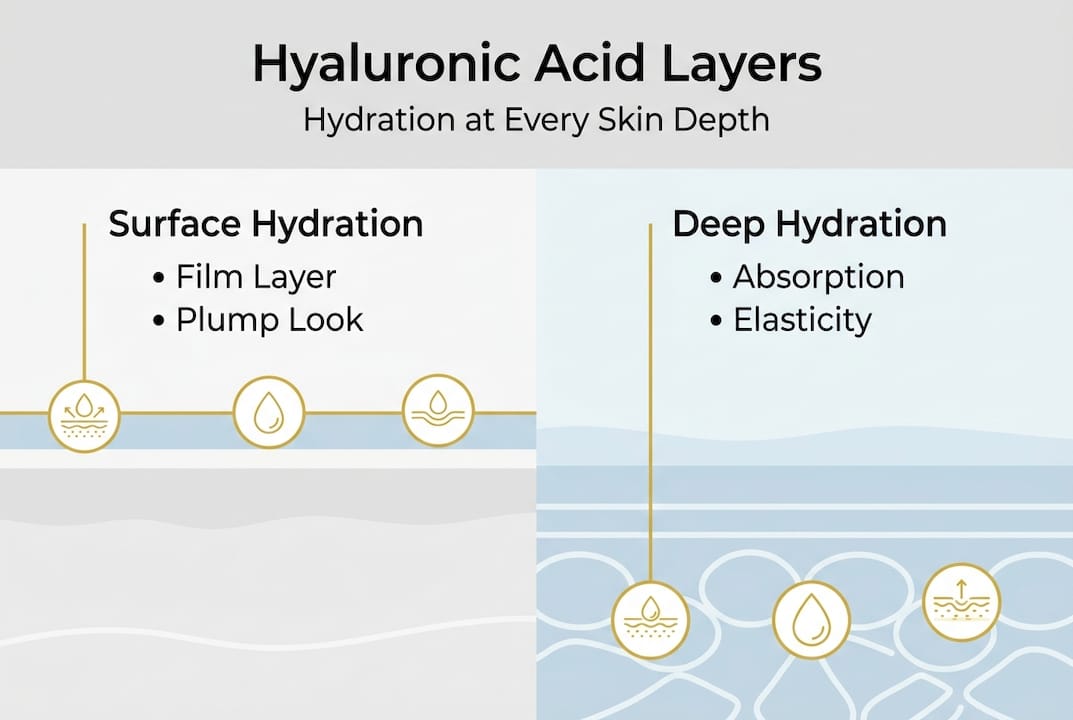
| High MW (above 1 MDa) | Large | Forms a film on the skin surface for instant hydration and barrier protection |
| Medium MW (50-1500 kDa) | Medium | Sustains moisture in the upper layers of the epidermis |
| Low MW (below 50 kDa) | Small | Penetrates deeper into the dermis to stimulate collagen production |
Single-weight serums only address one layer. That’s why multi-weight HA formulas are considered the gold standard for comprehensive hydration. You get the instant plumping effect on the surface AND the long-term structural support deeper down.
Think of it like watering a plant. Spraying the leaves helps immediately, but the roots need water too. A multi-weight HA serum does both at once.
For a deeper look at how to apply this knowledge to your routine, our HA application tips blog covers the full picture. And if you’re curious about how HA fits into a broader wellness approach, check out our breakdown of full-spectrum HA benefits alongside other glow-supporting nutrients.
Expert insights: Truths, myths, and the best formulations
There’s a lot of noise around HA online, so let’s cut through it with what the research actually says.
Myth 1: Hyaluronic acid exfoliates your skin. It doesn’t. HA is a humectant, meaning it draws moisture in. It has zero exfoliating properties. Confusing it with acids like glycolic or salicylic acid is a common mistake.
Myth 2: More HA is always better. Not quite. Low molecular weight HA in very high concentrations can be pro-inflammatory in excess, which is why full-spectrum formulations that balance multiple weights are safer and more effective for everyday use.
What experts actually recommend:
- Use a multi-weight topical HA serum morning and night on damp skin
- Seal it in with a moisturizer immediately after applying
- Combine topical HA with oral HA supplements for amplified anti-aging and wellness results
- Prioritize full-spectrum formulas over single-weight products for a more natural, lasting glow
- Pair HA with supplements for glowing skin to support radiance from the inside out
For enhanced results, layering HA with a multi-peptide serum can further support collagen synthesis and skin firmness. Peptides and HA work synergistically, each targeting different aspects of skin structure.
Pro Tip: If your skin feels tight or dry after applying HA, you’re likely applying it to dry skin. HA needs moisture to pull from. Always apply it right after cleansing while your skin is still slightly damp.
How to use hyaluronic acid: Pro routine for radiant skin
Knowing the science is one thing. Knowing exactly what to do with your serum every morning is another. Here’s a step-by-step routine that gets real results.
- Cleanse your face and leave skin slightly damp. Don’t pat completely dry.
- Apply your HA serum while skin is still moist. Use 2-3 drops and press gently into skin. Don’t rub.
- Layer your actives on top. HA is safe to pair with vitamin C, niacinamide, and retinoids without irritation.
- Seal with moisturizer immediately. This locks the HA and all that moisture in place.
- Apply SPF in the morning as your final step to protect all that hydration work.
- Repeat at night using the same steps, swapping SPF for a richer night cream if needed.
HA is non-comedogenic and safe for all skin types, including oily, acne-prone, sensitive, and even during pregnancy. That’s a rare quality in an active ingredient.
Clinical data backs this up. A 12-week randomized controlled trial with 150 participants showed a +11.5% hydration increase with consistent HA use, alongside measurable reductions in wrinkle depth and improved skin elasticity. Those aren’t small numbers.
For more detail on building your routine, our HA application essentials guide goes deeper. If you’re layering with vitamin C, our vitamin C layering blog explains the exact order and timing. And for a full internal glow approach, our B vitamins for radiance guide pairs beautifully with a topical HA routine.
Pro Tip: If you’re using retinoids at night, apply your HA serum first. It creates a hydrating buffer that reduces the dryness and flaking that retinoids can cause, making your skin more comfortable and your results more consistent.
Discover advanced hydration and radiance with Lumieve
You now know exactly how HA works, why molecular weight matters, and how to apply it for maximum results. The next step is putting that knowledge into practice with formulas you can actually trust.
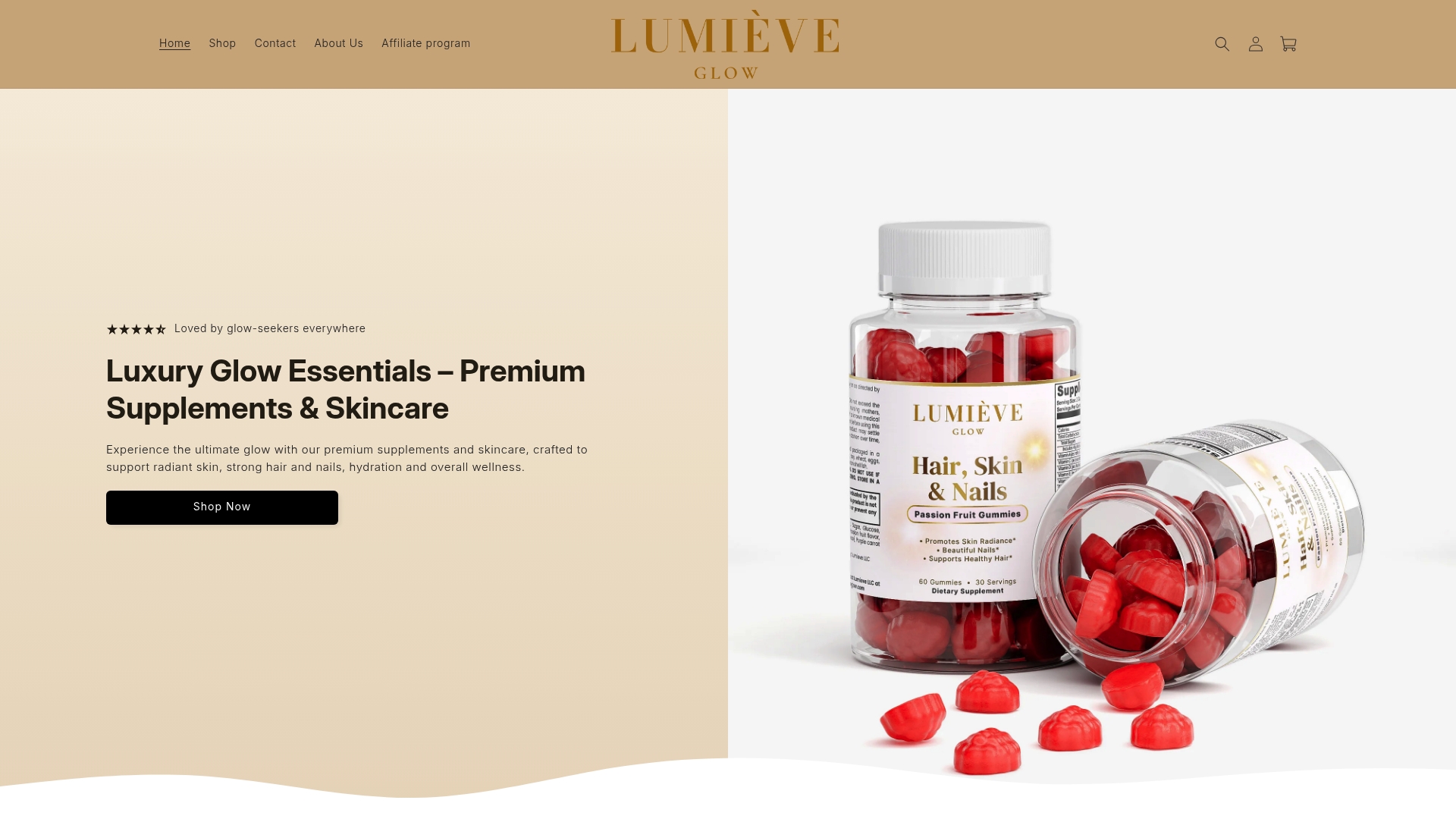
At Lumieve Glow, our LUMIEVE hyaluronic acid serum is formulated with multiple molecular weights to hydrate every layer of your skin, from the surface down to the dermis. It’s designed for all skin types and fits seamlessly into any routine. Pair it with our skincare serums collection to build a complete, targeted routine, or explore our premium serums for advanced combinations that support both your glow and your long-term skin health. Every product is lab-tested and crafted with quality ingredients you can feel good about using every single day.
Frequently asked questions
Is hyaluronic acid safe for sensitive or acne-prone skin?
Yes. HA is non-comedogenic and safe for all skin types, including sensitive and acne-prone skin, with no serious side effects reported in clinical studies.
Can I use hyaluronic acid serum with vitamin C or retinoids?
Absolutely. HA pairs well with vitamin C, niacinamide, and retinoids, boosting hydration and radiance without causing irritation or interactions.
Does hyaluronic acid help reduce wrinkles and support anti-aging?
Yes. Clinical studies show HA delivers a 9-11% hydration increase, reduced wrinkle depth, and improved skin elasticity with consistent use over 12 weeks.
Are all hyaluronic acid serums equally effective?
No. Serums with multi-weight HA deliver deeper and longer-lasting hydration compared to single-weight formulas, which only address one layer of the skin.
