

TL;DR:
- Plant-based collagen boosters support the body’s own collagen production with botanicals and nutrients.
- Clinical studies show they can improve skin hydration, elasticity, and reduce wrinkles within weeks.
- They are more sustainable and allergen-friendly compared to animal collagen sources.
If you’ve been shopping for vegan collagen supplements, here’s something that might surprise you: plant-based collagen does not actually contain collagen protein. Collagen is exclusively animal-derived, meaning no plant on earth produces it. What the beauty industry calls “plant-based collagen” is really a category of boosters, nutrients, and botanical extracts designed to help your body make more of its own collagen. For health-conscious women seeking clean, effective beauty solutions, this distinction matters. Understanding what these products actually do, and what the science really shows, helps you invest smarter in your skin, hair, and nails.
Table of Contents
- What is plant-based collagen? How it works and why it matters
- How plant-based collagen boosts skin, hair, and nail health
- Plant-based vs animal collagen: sustainability, safety, and efficacy
- Choosing and using plant-based collagen: smart strategies for clean beauty
- What most clean beauty guides miss about plant-based collagen
- Discover premium plant-based collagen and clean skincare solutions
- Frequently asked questions
Key Takeaways
| Point | Details |
|---|---|
| Plant-based collagen explained | It stimulates your body’s natural collagen production using key nutrients and botanicals rather than direct collagen protein. |
| Beauty results backed by science | Clinical trials show significant boosts in skin hydration, elasticity, wrinkle reduction, hair growth, and nail strength from plant-based boosters. |
| Eco-friendly and safe | Plant-based collagen avoids allergens and heavy metals and offers a much lower carbon footprint compared to animal collagen. |
| Smart selection is essential | Choose premium collagen formulas that clinically combine peptides, cofactors, and botanicals for best results. |
| Evidence and expectations | While promising, stick with clinically proven options and whole food diets for sustainable beauty benefits. |
What is plant-based collagen? How it works and why it matters
Let’s clear something up right away. True collagen is a structural protein found only in animals, built from amino acids like glycine, proline, and hydroxyproline. Plants cannot produce it. So when a label says “plant-based collagen,” it means the formula contains ingredients that support your body’s own collagen-making process, not collagen itself.
These products work by supplying the raw materials your skin cells need. Plant-based collagen boosters stimulate the body’s own collagen production with amino acids, vitamins, minerals, and plant extracts. Think of it like giving a construction crew the right tools and materials instead of handing them a finished wall.
The key components you’ll find in quality formulas include:
- Vitamin C: Essential for converting proline into hydroxyproline, the amino acid that gives collagen its stability
- Silica: A mineral that supports connective tissue and strengthens hair and nails
- Glycine and proline sources: Often derived from legumes, seeds, and fermented plant proteins
- Antioxidants: Protect existing collagen from oxidative damage caused by UV exposure and pollution
- Botanical extracts: Hibiscus, gotu kola, and bamboo are among the most studied
For a deeper look at how these mechanisms translate to visible beauty outcomes, the collagen skin benefits guide breaks it down clearly.
“The goal of plant-based collagen isn’t to replace animal collagen molecule for molecule. It’s to create the ideal internal environment where your body produces more of its own.”
Who benefits most from this approach? Women who follow vegan or plant-forward lifestyles, those with sensitivities to animal proteins, and anyone prioritizing sustainability in their beauty supplements. The science is still evolving, but the foundational logic is solid: give your body the right cofactors, and it will do the collagen-building work itself.
How plant-based collagen boosts skin, hair, and nail health
Now that we understand what plant-based collagen is, let’s see how it actually works in real beauty routines.
The most exciting clinical data comes from specific botanical formulas. VC-H1, a hibiscus-based ingredient taken at 1.5g per day for 12 weeks, improved skin hydration, elasticity, and reduced wrinkles in clinical trials. A biotin and silica combination used over 90 days increased elasticity and reduced visible wrinkles. VeCollal, a biomimetic plant-based formula, showed a 27.5% reduction in wrinkle depth and a 20.1% improvement in skin texture.

Hair and nail results are equally compelling. A 90-day observational study found that participants using a plant-based supplement experienced up to 50% faster hair growth and a 30% increase in hair density. Nail strength and growth rate also improved significantly.
Here’s how the key botanicals deliver these results:
- Hibiscus (VC-H1): Rich in anthocyanins and organic acids that stimulate fibroblast activity, the cells responsible for producing collagen in your skin
- Biotin: Supports keratin infrastructure, which is the protein backbone of both hair and nails
- Silica: Strengthens connective tissue and improves the cross-linking of collagen fibers
- Vitamin C: Without it, your body literally cannot complete the collagen synthesis process
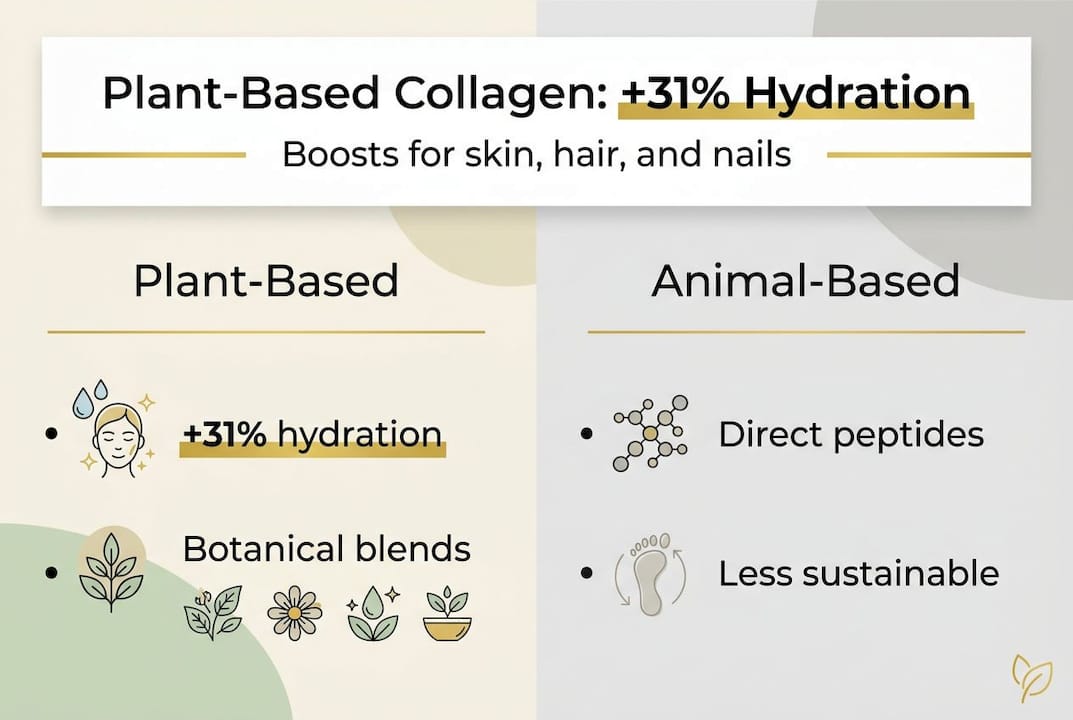
Statistic to know: Clinical data shows plant-based boosters can deliver a 31% gain in skin hydration with consistent daily use, a result that rivals many traditional collagen peptide supplements.
Pro Tip: Pair your plant-based collagen supplement with a vitamin C-rich diet, think bell peppers, citrus, and kiwi. Vitamin C is the rate-limiting factor in collagen synthesis, meaning without enough of it, even the best supplement won’t reach its full potential.
For more on which supplements for glowing skin work best together, and how to layer your top beauty vitamins for maximum results, combining these approaches is where the real magic happens. You can also explore multivitamin beauty results to see how stacking nutrients supports the full picture.
Plant-based vs animal collagen: sustainability, safety, and efficacy
Seeing beauty benefits is only part of the story. Let’s look at how plant-based collagen stacks up against traditional animal collagen across the areas that matter most to clean beauty consumers.
| Factor | Animal collagen | Plant-based collagen |
|---|---|---|
| Bioavailability | Higher (direct peptides) | Indirect (stimulates synthesis) |
| Allergen risk | Higher (fish, bovine) | Lower |
| Heavy metal exposure | Possible | Minimal |
| Carbon footprint | 28.73 CO2 eq/kg | 0.5 CO2 eq/kg |
| Vegan-friendly | No | Yes |
| Moisture retention (TEWL) | Good | Can outperform in some studies |
Animal collagen provides direct peptides with better bioavailability and stronger elasticity results in some studies. That’s a real advantage. But plant-based options avoid allergens, sidestep heavy metal concerns, and carry a dramatically lower environmental cost.
The carbon footprint comparison is striking. At 0.5 CO2 eq/kg versus 28.73 CO2 eq/kg for animal-derived collagen, plant-based formulas are nearly 57 times less carbon-intensive. For eco-conscious women, that number is hard to ignore.
Here’s how to think about the tradeoffs:
- Choose animal collagen if you want the most direct peptide delivery and have no dietary restrictions or allergen concerns.
- Choose plant-based boosters if you follow a vegan lifestyle, have sensitivities to fish or bovine proteins, or prioritize environmental impact.
- Consider combining both approaches if you’re open to a hybrid routine, using plant-based supplements daily and adding targeted animal collagen during high-demand periods like post-sun exposure or seasonal skin changes.
“Clean beauty isn’t just about what you put on your skin. It’s about the full impact of every product you choose, from ingredient sourcing to carbon output.”
For more on how beauty vitamins fit into a holistic routine, and why B vitamins for skin play a supporting role in collagen health, the evidence points to a whole-system approach. Emerging collagen booster evidence also suggests that plant-based formulas are catching up faster than many expected.
Choosing and using plant-based collagen: smart strategies for clean beauty
Once you’ve weighed the options, it’s time to make smart choices for your own beauty routine.
Not all plant-based collagen products are created equal. The supplement market is crowded with formulas that look impressive on the label but lack the clinically tested doses needed to make a real difference. Here’s what to prioritize:
- Hibiscus extract (VC-H1): Look for at least 1.5g per serving, the dose used in clinical trials
- Biotin and silica combination: Both are needed together for hair and nail benefits; silica alone is not enough
- Vitamin C: Must be present in meaningful amounts (at least 500mg daily) to support collagen synthesis
- Antioxidant complex: Astaxanthin, resveratrol, or green tea extract protect collagen from breakdown
- Low-molecular-weight peptides or biomimetic peptides: These signal your skin cells to ramp up collagen production
- Clean label: No artificial fillers, heavy metals, or undisclosed allergens
Premium plant-based formulas feature low-MW peptides, hydroxyproline mimics, and antioxidants at effective daily doses of 1.5 to 10g. Anything below that range is unlikely to produce measurable results.
Pro Tip: Take your plant-based collagen supplement in the morning with a vitamin C-rich juice or smoothie. Collagen synthesis peaks during the day when your skin cells are most metabolically active, and pairing it with vitamin C maximizes absorption.
For topical support, a multi-peptide serum applied after cleansing can reinforce the work your supplement is doing internally. The collagen safety data on plant-based formulas is reassuring, with low adverse event rates across multiple studies. You can also explore Lumieve Glow alternatives to compare options and find the right fit for your routine.
What most clean beauty guides miss about plant-based collagen
Here’s the uncomfortable truth that most brand-sponsored guides won’t tell you: plant-based collagen boosters are a genuinely clean, eco-friendly step forward, but they are not a shortcut to younger skin.
The clinical evidence is promising but still emerging. Hibiscus VC-H1 shows real potency, but long-term randomized controlled trials are limited. Most studies run 12 weeks or less. We don’t yet know what happens at the two-year or five-year mark. That’s not a reason to avoid these products. It’s a reason to set realistic expectations.
The women who see the best results from plant-based collagen are the ones who treat it as one piece of a larger system. They combine clinically proven boosters with whole food nutrition, consistent sun protection, gentle skincare, and adequate sleep. The supplement does not do the heavy lifting alone.
We believe brands have a responsibility to educate, not oversell. Seek out formulas with proven cofactors, transparent dosing, and honest communication about what the science currently supports. The collagen guide for skin is a good starting point for building that informed foundation.
Discover premium plant-based collagen and clean skincare solutions
If you’re ready to take your beauty routine to the next level with clean, evidence-backed ingredients, Lumieve Glow has options built specifically for women who want results without compromise.
Our plant-based collagen strips deliver key botanicals in a convenient, bioavailable format designed for daily use. For topical support, our premium skincare serums are formulated with peptides and antioxidants that work in sync with your internal routine. And our vitamin C serum provides the essential cofactor your skin needs to turn those plant-based boosters into real, visible collagen. Every product is lab-tested, clean-labeled, and crafted for women who take their glow seriously.
Frequently asked questions
Is plant-based collagen real collagen?
No. Plant-based collagen is made from amino acids, vitamins, and plant extracts that help your body create its own collagen, not true collagen protein, which is exclusively animal-derived.
Can plant-based collagen really improve skin, hair, or nails?
Yes, with consistent use. Clinical studies show that hibiscus, biotin, and silica-based boosters can enhance hydration, improve elasticity, reduce wrinkles, and strengthen hair and nails over 12 to 90 days.
Are plant-based collagen products more sustainable and safer?
Generally, yes. Plant-based boosters carry a carbon footprint of 0.5 CO2 eq/kg compared to 28.73 for animal collagen, and they avoid the allergens and heavy metal risks associated with animal-derived sources.
What ingredients should I look for in plant-based collagen products?
Prioritize clinically tested botanicals like hibiscus VC-H1, biotin, and silica alongside proven cofactors like vitamin C and antioxidants, at effective daily doses between 1.5 and 10g.
