

You’ve probably heard that vitamin C serum is a skincare essential, but do you know what it actually does for your skin? Many people assume all vitamin C serums work the same way, delivering vague brightening benefits. The reality is far more impressive. Vitamin C serum functions as a powerful antioxidant that protects against environmental damage, actively boosts collagen production to firm skin, and inhibits pigmentation at the cellular level. For women in their 20s through 40s seeking to enhance natural radiance and maintain healthy skin, understanding these specific mechanisms transforms vitamin C from a trendy ingredient into a targeted solution. This guide breaks down exactly how vitamin C serum works, what benefits you can expect, and how to choose formulations that deliver real results without irritation.
Table of Contents
- Key takeaways
- How vitamin C serum protects your skin from daily damage
- Boosting collagen and reducing fine lines with vitamin C serum
- Brightening skin and evening tone: how vitamin C fights pigmentation
- Choosing and using vitamin C serum safely and effectively
- Explore curated vitamin C serums and supplements for radiant skin
- Frequently asked questions about vitamin C serum
Key Takeaways
| Point | Details |
|---|---|
| Antioxidant protection | Vitamin C serum protects skin from environmental damage by neutralizing reactive oxygen species and supports cellular defenses when paired with vitamin E and ferulic acid. |
| Collagen boosting | It directly stimulates collagen synthesis by serving as a cofactor for prolyl hydroxylase and lysyl hydroxylase, helping to firm skin and reduce fine lines. |
| Brightening effects | Regular use helps inhibit pigmentation and even skin tone by targeting pigment production at the cellular level. |
| Sensitive skin friendly | Choosing formulations designed for sensitive skin and avoiding irritants helps deliver real results without irritation. |
| Morning application | Apply vitamin C serum every morning before sunscreen to maximize photoprotection and boost antioxidant benefits. |
How vitamin C serum protects your skin from daily damage
Your skin faces constant assault from environmental stressors that accelerate aging and dull your complexion. UV radiation and air pollution generate reactive oxygen species (ROS), unstable molecules that damage cellular structures and break down collagen. Vitamin C serum acts as a potent antioxidant, intercepting these free radicals before they cause harm. The mechanism is elegant: ascorbic acid donates electrons to neutralize ROS, sacrificing itself to preserve your skin cells.
This protective function operates continuously when you apply vitamin C serum daily. The molecule serves as a cofactor for enzymes that defend against oxidative stress, essentially creating a chemical shield at the cellular level. Think of it as an invisible barrier that absorbs environmental hits so your skin doesn’t have to. The effect is particularly valuable for women who spend time outdoors or live in urban areas with high pollution exposure.
Research demonstrates that vitamin C doesn’t work alone for maximum protection. When formulated with vitamin E and ferulic acid, the antioxidant capacity doubles, creating a synergistic defense system. This combination stabilizes the vitamin C molecule itself, extending its active lifespan on your skin. The practical benefit is more robust protection against photoaging, the premature aging caused by sun exposure that shows up as wrinkles, texture changes, and uneven tone.
Key protective benefits include:
- Prevention of collagen breakdown from UV exposure
- Reduction in inflammation triggered by pollution particles
- Defense against DNA damage in skin cells
- Minimized oxidative stress that leads to premature aging signs
Pro Tip: Apply vitamin C serum every morning before sunscreen to maximize photoprotection. The serum enhances your SPF’s effectiveness while providing antioxidant benefits that physical and chemical filters cannot deliver.
The consistent use of a quality vitamin C serum brightening guide approach transforms how your skin responds to daily environmental challenges. Instead of accumulating damage that manifests as dullness and aging, your complexion maintains its resilience and natural glow. This foundational protection sets the stage for the active benefits we’ll explore next.
Boosting collagen and reducing fine lines with vitamin C serum
Collagen gives skin its structure and bounce, but production naturally declines starting in your mid 20s. By age 30, you’re producing about 1% less collagen each year, leading to the fine lines and loss of firmness that concern many women. Vitamin C reverses this trend by directly stimulating collagen synthesis at the molecular level. The vitamin serves as an essential cofactor for prolyl hydroxylase and lysyl hydroxylase, two enzymes that stabilize collagen molecules during formation.

Without adequate vitamin C, these enzymes cannot function properly, and newly formed collagen remains weak and unstable. When you apply vitamin C serum topically, you deliver high concentrations directly to fibroblasts, the cells responsible for manufacturing collagen. Clinical studies show significant wrinkle reduction after 12 weeks of consistent use, with improvements in skin thickness and elasticity measured objectively through imaging technology.
The timeline matters for setting realistic expectations. You won’t wake up with transformed skin after one application. Collagen remodeling is a gradual process that requires sustained vitamin C levels in your skin tissue. Most users notice subtle improvements in texture around week 4, with more obvious firmness and line reduction becoming apparent between weeks 8 and 12. This makes vitamin C serum an investment in long term skin health rather than a quick fix.
To maximize collagen boosting effects, follow this application sequence:
- Cleanse your face thoroughly to remove barriers that block serum absorption
- Apply 3-4 drops of vitamin C serum to slightly damp skin for better penetration
- Gently press the serum into your face and neck using upward motions
- Wait 2-3 minutes for complete absorption before applying other products
- Follow with moisturizer and SPF to seal in the serum and protect new collagen
- Repeat every morning for consistent results over 12 weeks minimum
Pro Tip: Choose serums with L-ascorbic acid at 10-20% concentration for optimal collagen stimulation. Lower concentrations may not provide enough active ingredient, while higher percentages increase irritation risk without proportional benefits.
The connection between vitamin C and collagen extends beyond just production. The vitamin also protects existing collagen from degradation by matrix metalloproteinases, enzymes that break down structural proteins when activated by UV exposure. This dual action of building new collagen while preserving what you have creates a compounding effect. Women who start using vitamin C serum in their 20s and 30s often maintain firmer, more resilient skin compared to peers who delay treatment.
Integrating top supplements for glowing skin with topical vitamin C creates an inside-out approach to collagen support. While serum delivers concentrated doses to facial skin, oral supplements provide systemic support for collagen throughout your body. The combination addresses both cosmetic concerns and overall skin health.
Brightening skin and evening tone: how vitamin C fights pigmentation
Dark spots, post-inflammatory hyperpigmentation, and uneven tone frustrate many women seeking radiant skin. These pigmentation issues stem from excess melanin production triggered by sun exposure, hormonal changes, or inflammation from breakouts. Vitamin C interrupts this process at the source by inhibiting tyrosinase, the enzyme that converts amino acids into melanin. When tyrosinase activity decreases, your skin produces less pigment, allowing existing dark spots to fade as skin cells naturally turn over.
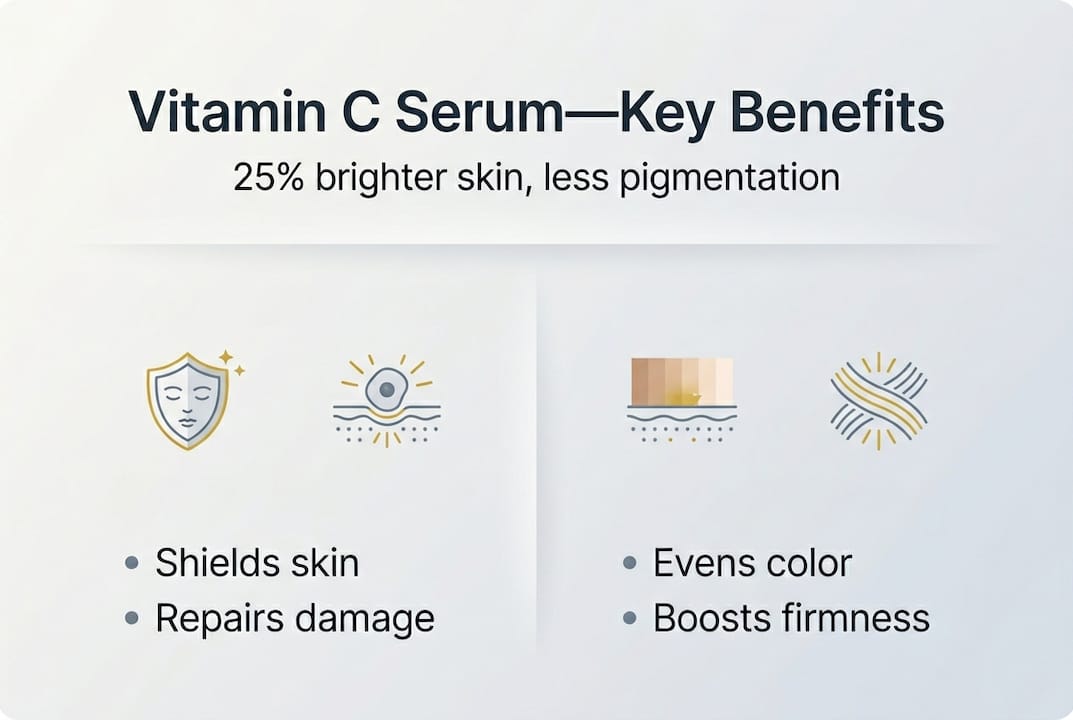
The brightening effect is measurable and significant. Clinical evaluations using standardized imaging show a 25.9% improvement in skin brightness after consistent vitamin C serum use for several weeks. This isn’t subjective perception but objective data captured through spectrophotometry. The improvement appears gradually as melanin-heavy cells shed and are replaced by cells with more even pigmentation. Most users notice their complexion looking more luminous and uniform within 4-6 weeks.
Comparing vitamin C to other brightening agents helps you understand its unique position:
| Ingredient | Mechanism | Effectiveness | Safety Profile | Daily Use |
|---|---|---|---|---|
| Vitamin C serum | Inhibits tyrosinase enzyme | High (25.9% brightness improvement) | Excellent for most skin types | Yes, morning application |
| Hydroquinone | Blocks melanin synthesis | Very high | Restricted use, potential side effects | Limited duration only |
| Niacinamide | Prevents melanin transfer | Moderate to high | Excellent, very gentle | Yes, AM or PM |
| Kojic acid | Inhibits tyrosinase | Moderate | Good, some sensitivity | Yes, with caution |
| Alpha arbutin | Tyrosinase inhibitor | Moderate | Excellent | Yes, stable option |
Vitamin C stands out for combining high effectiveness with excellent safety, making it suitable for long term daily use without the restrictions that limit hydroquinone or the gentler but slower results from alternatives.
The brightening benefits extend beyond fading existing spots:
- Enhanced overall radiance and glow
- Reduced appearance of sun damage and age spots
- More uniform complexion without harsh treatments
- Prevention of new hyperpigmentation formation
- Complementary effects when layered with other brighteners
For women with sensitive skin or concerns about irritation, vitamin C serum offers a gentle path to brighter skin. Unlike some brightening treatments that work through exfoliation or can cause redness, vitamin C achieves results through metabolic regulation. You’re not stripping away layers or forcing rapid cell turnover. Instead, you’re guiding your skin toward more balanced pigment production.
The vitamin C serum product formulations designed for daily use incorporate stabilizing ingredients that maintain potency while minimizing irritation potential. This allows consistent application that delivers cumulative brightening effects. The key is patience and regularity rather than aggressive treatment that might trigger more pigmentation through inflammation.
Choosing and using vitamin C serum safely and effectively
Not all vitamin C serums deliver the same results or suit every skin type. The form of vitamin C, concentration, pH level, and supporting ingredients dramatically impact both effectiveness and tolerability. L-ascorbic acid represents the gold standard for potency, the form most extensively studied and proven effective. However, its instability and low pH requirements create challenges for sensitive skin. This is where understanding vitamin C derivatives becomes valuable.
Derivatives like THD ascorbate and ascorbyl glucoside offer more stability and gentler application. THD ascorbate penetrates deeply and converts to active vitamin C within skin cells, delivering benefits without the harsh acidity of L-ascorbic acid. Ascorbyl glucoside provides steady, sustained release of vitamin C, making it ideal for those who experience irritation from traditional formulations. The tradeoff is slightly reduced potency, though consistent use still produces excellent results.
| Vitamin C Form | Potency | Stability | Irritation Rate | Best For |
|---|---|---|---|---|
| L-ascorbic acid | Highest | Low (oxidizes easily) | 55% at low pH | Normal to oily skin, maximum results |
| THD ascorbate | High | Excellent | Very low | All skin types, oil-soluble benefits |
| Ascorbyl glucoside | Moderate | Excellent | Very low | Sensitive skin, gentle approach |
| Sodium ascorbyl phosphate | Moderate | Good | Low | Acne-prone skin, stable option |
| Magnesium ascorbyl phosphate | Moderate | Good | Low | Dry or mature skin |
Concentration matters as much as form. Irritation from high concentration affects 24% of users at levels above 20%, while low pH formulations cause issues for 55% of people. This explains why many women try vitamin C serum once, experience redness or stinging, and abandon it entirely. The solution is starting with moderate concentrations (10-15%) and pH levels around 6 for sensitive skin, or choosing derivatives that work at neutral pH.
Practical tips for minimizing irritation:
- Perform a patch test on your inner arm for 24 hours before facial application
- Start with application every other day, gradually increasing to daily use
- Apply to completely dry skin, as water can increase penetration and irritation
- Use a pea-sized amount, more product doesn’t mean better results
- Store serum in a cool, dark place to prevent oxidation that reduces effectiveness
- Replace serum if it turns yellow or brown, indicating oxidation
Pro Tip: If you have sensitive skin, look for formulations at pH 6 or vitamin C derivatives rather than pure L-ascorbic acid. You’ll achieve similar brightening and anti-aging benefits with significantly less irritation risk.
Timing your vitamin C application optimizes results. Morning use before sunscreen provides antioxidant protection throughout the day when your skin faces UV and pollution exposure. The combination of vitamin C serum and SPF creates synergistic photoprotection stronger than either product alone. Some dermatologists recommend vitamin C in the evening as well for maximum anti-aging benefits, though morning application remains the priority.
Layering vitamin C with other active ingredients requires strategy. Vitamin C and niacinamide work beautifully together despite old myths about incompatibility. Retinol and vitamin C can be used in the same routine but typically at different times (vitamin C morning, retinol evening) to avoid overwhelming skin. Avoid using vitamin C with benzoyl peroxide, as they inactivate each other.
Exploring beauty enhancing vitamins guide options helps you understand how topical vitamin C fits into a comprehensive approach to skin health. Combining external application with internal nutrition creates the foundation for lasting radiance that goes beyond surface improvements.
Explore curated vitamin C serums and supplements for radiant skin
Now that you understand how vitamin C serum protects, firms, and brightens your skin, you might be wondering where to find formulations that deliver these benefits without the trial and error of testing dozens of products. Lumieve Glow specializes in premium skincare solutions designed specifically for women seeking to enhance their natural radiance through targeted, effective ingredients.
Our premium vitamin C serum features stabilized L-ascorbic acid at optimal concentration, formulated with vitamin E and ferulic acid for maximum antioxidant protection and collagen support. The lightweight texture absorbs quickly without greasiness, fitting seamlessly into morning routines before makeup application. Beyond vitamin C, explore our complete skincare serums collection featuring complementary treatments that address multiple skin concerns through science-backed formulations. For comprehensive beauty support, our dietary supplements for beauty provide internal nourishment that enhances what topical treatments can achieve. Each product undergoes rigorous quality testing to ensure you receive effective concentrations of active ingredients in stable, skin-friendly formulations.
Frequently asked questions about vitamin C serum
When should I apply vitamin C serum in my routine?
Apply vitamin C serum every morning after cleansing and before moisturizer and sunscreen. Morning application provides antioxidant protection throughout the day when your skin faces UV exposure and pollution. For enhanced anti-aging benefits, some people also apply vitamin C serum in the evening, though morning remains the priority for photoprotection.
Why does vitamin C serum cause irritation and how can I prevent it?
Irritation typically results from low pH formulations (under pH 3.5) or high concentrations above 20%. About 55% of users experience sensitivity to low pH products. Prevent irritation by choosing serums with pH around 6, starting with 10-15% concentration, or selecting derivatives like THD ascorbate that work at neutral pH without sacrificing effectiveness.
How long before I see results from vitamin C serum?
Brightening effects typically appear within 4-6 weeks of consistent daily use, with clinical studies showing 25.9% improvement in skin brightness. Collagen-related benefits like reduced fine lines and improved firmness take longer, becoming noticeable around 8-12 weeks. Antioxidant protection begins immediately, though visible benefits accumulate over time.
Which vitamin C form works best for sensitive skin?
THD ascorbate and ascorbyl glucoside work best for sensitive skin because they function at neutral pH and cause minimal irritation while still delivering brightening and anti-aging benefits. These derivatives convert to active vitamin C within skin cells, providing effectiveness without the harsh acidity of L-ascorbic acid that triggers redness and stinging in many users.
Can I use vitamin C serum with retinol and niacinamide?
Yes, vitamin C works well with both ingredients when applied strategically. Use vitamin C serum in the morning and retinol at night to avoid overwhelming skin with multiple actives simultaneously. Vitamin C and niacinamide can be layered in the same routine despite outdated compatibility concerns, as modern formulations buffer pH appropriately for both ingredients to function effectively together.
Does vitamin C serum expire or lose effectiveness?
Yes, vitamin C serum degrades through oxidation, especially L-ascorbic acid formulations. Replace your serum if it turns yellow, orange, or brown, as these color changes indicate oxidation that reduces effectiveness. Store serum in a cool, dark place and use within 3-6 months of opening. Derivatives like THD ascorbate and ascorbyl glucoside offer better stability and longer shelf life.
